Article Outline: IPTV Subscription Service
- H1: IPTV Subscription Service: The Ultimate Guide to Modern Streaming
- H2: What Is an IPTV Subscription Service?
- H3: How IPTV Works Behind the Scenes
- H3: IPTV vs Traditional Cable and Satellite TV
- H2: Types of IPTV Services Available
- H3: Live TV IPTV Services
- H3: Video on Demand (VOD) IPTV
- H3: Time-Shifted IPTV and Catch-Up TV
- H2: Key Features of a Good IPTV Subscription Service
- H3: Channel Variety and Content Quality
- H3: Streaming Resolution and Performance
- H3: Device Compatibility and Apps
- H2: Benefits of Using IPTV Subscription Services
- H3: Cost-Effectiveness Compared to Cable
- H3: Flexibility and Convenience
- H2: Potential Downsides and Risks of IPTV
- H3: Legal Considerations
- H3: Security and Privacy Concerns
- H2: How to Choose the Best IPTV Subscription Service
- H3: Pricing and Subscription Plans
- H3: Customer Support and Reliability
- H2: Best Devices for IPTV Streaming
- H3: Smart TVs, Firestick, and Android Boxes
- H3: Mobile Devices and PCs
- H2: IPTV Setup Guide for Beginners
- H2: Future of IPTV Subscription Services
- H2: Conclusion
- H2: FAQs
- H2: What Is an IPTV Subscription Service?
IPTV Subscription Service: The Ultimate Guide to Modern Streaming
What Is an IPTV Subscription Service?
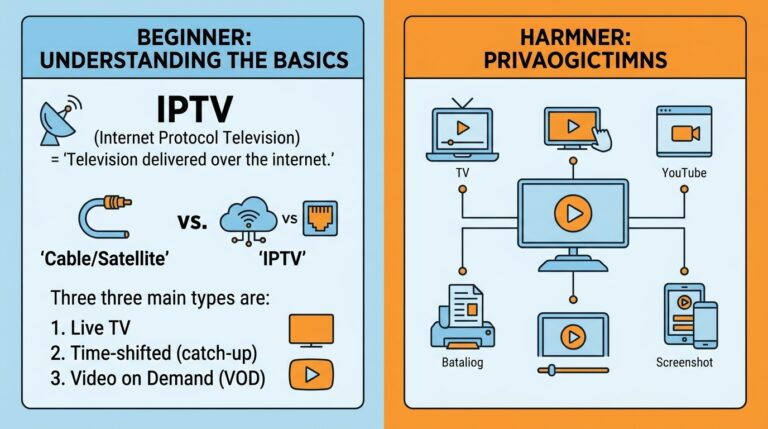
If you’ve ever wondered why everyone seems to be ditching cable TV lately, you’re not alone. The answer often comes down to one powerful alternative: IPTV subscription services. IPTV stands for Internet Protocol Television, which is just a fancy way of saying that television content is delivered through the internet instead of traditional satellite or cable formats. Sounds simple, right? But the impact it has on how we consume content is massive.
Instead of relying on fixed broadcast schedules or bulky hardware, IPTV lets you stream your favorite shows, movies, and live channels directly through your internet connection. That means no more waiting for your favorite show to air at a specific time. You decide when and where to watch. It’s like having complete control over your entertainment universe.
What makes IPTV even more appealing is its ability to combine live TV, on-demand content, and recorded shows all in one place. Think of it as Netflix, Hulu, and live sports channels rolled into a single platform. Whether you’re into binge-watching drama series or catching live football matches, IPTV services cater to every taste.
Another reason people are switching is cost. Traditional cable subscriptions can be expensive and often come with channels you never watch. IPTV services, on the other hand, usually offer customizable packages at a fraction of the cost. This flexibility makes it especially attractive to younger audiences and tech-savvy users.
In short, an IPTV subscription service is reshaping how we experience television. It’s not just about watching content anymore—it’s about owning your viewing experience.
How IPTV Works Behind the Scenes
At first glance, IPTV might seem like magic. You click a channel, and it instantly starts playing. But behind that smooth experience lies a pretty sophisticated system. Understanding how IPTV works can help you appreciate why it’s becoming so popular—and why not all services are created equal.
Unlike traditional broadcasting methods that send signals through satellite or cable, IPTV uses your internet connection to deliver content. This means that when you select a show or channel, the service sends data packets over the internet directly to your device. These packets are then decoded and displayed as video. It’s similar to how YouTube or Netflix works, but with the added complexity of live streaming.
There are typically three main formats involved in IPTV delivery:
- Live Television – Streaming content in real-time, just like traditional TV.
- Video on Demand (VOD) – Accessing a library of content whenever you want.
- Time-Shifted Media – Watching previously aired content at your convenience.
What makes IPTV efficient is its use of IP multicasting, which allows providers to send a single stream to multiple users simultaneously. This reduces bandwidth usage and ensures smoother streaming, especially during popular events like sports matches.
Another key component is the set-top box or app. This is what decodes the incoming data and turns it into watchable content. Modern IPTV services often provide apps for smart TVs, smartphones, and streaming devices, eliminating the need for extra hardware.
Of course, your experience heavily depends on your internet speed. A stable connection of at least 10 Mbps for HD streaming and 25 Mbps for 4K content is generally recommended. Without it, you might face buffering issues, which can quickly ruin your viewing experience.
So while IPTV feels seamless, it’s actually a well-orchestrated system working behind the scenes to deliver content efficiently and reliably.
IPTV vs Traditional Cable and Satellite TV
Let’s be honest—traditional cable TV feels a bit outdated in today’s on-demand world. But how exactly does IPTV stack up against cable and satellite services? The differences go beyond just technology; they reshape the entire viewing experience.
First, there’s the issue of flexibility. Cable TV operates on a fixed schedule, meaning you have to tune in at specific times to catch your favorite shows. IPTV flips this model completely. You can watch what you want, when you want, without being tied to a broadcast schedule. It’s like moving from a rigid timetable to complete freedom.
Then there’s cost. Cable and satellite subscriptions often come bundled with dozens (or even hundreds) of channels you never watch. IPTV services typically offer more customizable packages, allowing you to pay only for what you actually use. According to recent industry reports, users can save up to 30–50% by switching to IPTV.
Another major difference is content variety. IPTV services often include international channels, niche content, and exclusive on-demand libraries that traditional providers simply can’t match. Whether you’re interested in foreign films or specialized sports coverage, IPTV opens up a much wider world of entertainment.
However, IPTV isn’t without its challenges. Unlike cable, which is generally stable regardless of internet conditions, IPTV depends entirely on your internet connection. If your Wi-Fi is unreliable, your viewing experience will suffer.
Here’s a quick comparison:
| Feature | IPTV | Cable/Satellite |
|---|---|---|
| Flexibility | High | Low |
| Cost | Lower | Higher |
| Content Variety | Extensive | Limited |
| Internet Dependency | Yes | No |
| Device Compatibility | Multiple Devices | TV Only |
At the end of the day, IPTV represents a shift toward user-centric entertainment. It puts control back in your hands, making traditional TV feel like a relic of the past.
Types of IPTV Services Available
When people talk about IPTV subscription services, they often assume it’s just one uniform experience. In reality, IPTV is more like a buffet than a fixed menu—you get different types of services depending on how you like to consume content. Understanding these categories can help you choose a service that actually fits your lifestyle instead of overwhelming you with features you’ll never use.
At its core, IPTV is divided into three main service types: live TV, video on demand (VOD), and time-shifted content. Each one serves a different purpose, and most premium IPTV providers bundle all three together to create a complete entertainment ecosystem. But the real value lies in how these services complement each other.
Think about it like this: live TV is for real-time experiences like sports or news, VOD is for binge-watching your favorite series at midnight, and time-shifted IPTV is your safety net when life gets busy and you miss something important. This layered approach gives IPTV a huge advantage over traditional TV, which tends to lock you into a single way of watching.
Another important detail is personalization. Many IPTV services use algorithms to recommend content based on your viewing habits. This makes the experience feel tailored, almost like the platform “knows” what you want before you even search for it. That’s something cable TV has struggled to replicate effectively.
As we break down each type of IPTV service, you’ll start to see why this technology isn’t just replacing cable—it’s redefining what television even means in the digital age.
Live TV IPTV Services
Live TV is where IPTV feels most familiar, especially if you’re transitioning from cable or satellite. It replicates the traditional TV experience but enhances it with modern flexibility. You still get access to real-time broadcasts, including news channels, sports events, and entertainment programs—but without the rigid limitations of old-school broadcasting.
One of the biggest advantages of live IPTV is accessibility. You’re no longer tied to a single television in your living room. Whether you’re commuting, traveling, or just relaxing in bed, you can stream live channels directly from your smartphone, tablet, or laptop. That kind of freedom changes how and where people engage with content.
Another major perk is the global reach. Traditional cable providers are often limited by geographic licensing, but IPTV services can offer international channels from across the world. Want to watch European football leagues, Asian dramas, or U.S. news while living abroad? IPTV makes that possible without complicated setups.
Latency used to be a concern with live IPTV, especially during major sporting events. However, modern services have significantly reduced delays through improved streaming protocols and content delivery networks (CDNs). While there may still be a slight lag compared to satellite broadcasts, it’s often negligible for most viewers.
Many live IPTV services also include interactive features such as pause, rewind, and instant replay, even during live broadcasts. Imagine watching a live match and being able to rewind a goal instantly—that’s something traditional TV simply can’t compete with.
In essence, live IPTV combines the excitement of real-time viewing with the flexibility of digital streaming, making it a powerful option for viewers who don’t want to miss out on live events.
Video on Demand (VOD) IPTV
If live TV is about staying in the moment, Video on Demand (VOD) is all about control. This is where IPTV truly shines and separates itself from traditional broadcasting. With VOD, you get access to a massive library of movies, TV shows, documentaries, and more—all available at your fingertips, 24/7.
Think of VOD as your personal entertainment vault. There’s no schedule, no waiting, and no pressure. Want to watch an entire season in one sitting? Go for it. Prefer to pause halfway and come back later? That’s perfectly fine too. This level of freedom has fundamentally changed how people consume media, giving rise to the binge-watching culture we see today.
A good IPTV VOD library doesn’t just offer quantity—it delivers quality and diversity. From blockbuster hits to indie films and international content, the variety can be staggering. Some services even update their libraries regularly, ensuring you always have something new to explore.
Another advantage is the user interface. Modern IPTV platforms are designed to feel intuitive, with smart search features, categorized libraries, and personalized recommendations. This reduces the time you spend scrolling endlessly and increases the time you actually enjoy watching.
However, not all VOD services are created equal. The quality of content, streaming speed, and availability can vary significantly between providers. That’s why it’s important to choose a reputable IPTV service that offers high-resolution streaming and a well-maintained content library.
Ultimately, VOD turns entertainment into a self-directed experience. You’re no longer following someone else’s schedule—you’re creating your own.
Time-Shifted IPTV and Catch-Up TV
Life doesn’t always align with TV schedules, and that’s exactly where time-shifted IPTV comes into play. This feature allows you to watch content that has already been broadcast, giving you a second chance to catch what you missed. It’s like having a built-in rewind button for your entire TV experience.
Catch-up TV is one of the most practical features of IPTV services. Missed last night’s episode of your favorite show? No problem—you can watch it the next day without needing to record it manually. This removes a lot of the stress associated with keeping up with regular programming.
Time-shifted IPTV also includes features like pause, rewind, and fast-forward, even for live broadcasts. Imagine pausing a live news segment to take a call and then resuming exactly where you left off. It’s a small convenience that makes a big difference in everyday use.
Some IPTV providers offer extended catch-up periods, allowing users to access content from the past 7, 14, or even 30 days. This flexibility ensures you rarely miss anything important, even during a busy schedule.
From a technical perspective, time-shifted IPTV requires robust storage and efficient data management systems. Providers must maintain large archives of previously aired content while ensuring quick access and smooth playback. That’s why high-quality services tend to invest heavily in infrastructure.
For viewers, though, the experience feels effortless. You simply browse, click, and watch—no planning required. It’s television that adapts to your life, rather than forcing you to adapt to it.
Key Features of a Good IPTV Subscription Service
Choosing an IPTV service can feel overwhelming because there are so many options out there, each promising the best experience. But once you know what features actually matter, the decision becomes much clearer. A great IPTV subscription service isn’t just about having thousands of channels—it’s about delivering a smooth, reliable, and enjoyable viewing experience.
The first thing to look for is content variety. A good service should offer a balanced mix of live channels, VOD content, and international programming. This ensures you’re not limited in your viewing choices, whether you’re into sports, movies, or niche content.
Next comes streaming quality. There’s nothing more frustrating than buffering during a crucial moment in a show or game. High-quality IPTV providers offer HD, Full HD, and even 4K streaming options, supported by stable servers and fast load times.
Another crucial factor is device compatibility. The best IPTV services work seamlessly across multiple devices, including smart TVs, smartphones, tablets, and streaming devices like Firestick or Roku. This flexibility allows you to switch between devices without losing your place.
User experience also plays a huge role. A clean, intuitive interface can make a world of difference, especially when navigating large content libraries. Features like search filters, favorites lists, and parental controls add to the overall convenience.
Finally, reliability and customer support should never be overlooked. Even the best services can encounter issues, and having responsive support can save you a lot of frustration. Look for providers with positive reviews and a track record of consistent performance.
In the end, the best IPTV service is one that blends performance, variety, and usability into a seamless package.
Channel Variety and Content Quality
When evaluating an IPTV subscription service, the first thing most people notice is the sheer number of channels offered. But here’s the catch—more isn’t always better. What truly matters is the quality and relevance of the content. A service boasting 10,000 channels might sound impressive, but if half of them are broken, duplicated, or rarely updated, the experience quickly becomes frustrating.
A well-rounded IPTV provider focuses on delivering a curated mix of content. This includes local and international channels, premium sports networks, entertainment hubs, kids’ programming, and even niche categories like documentaries or regional cinema. The goal is to create an ecosystem where every member of the household finds something worth watching.
Content quality goes beyond just availability—it’s about resolution, reliability, and consistency. High-definition (HD) and 4K streams are becoming the standard, especially as more households upgrade their screens. Watching a blurry or pixelated stream on a 55-inch TV is like putting cheap tires on a luxury car—it just doesn’t make sense.
Another key factor is content freshness. Good IPTV services update their libraries frequently, adding new movies, episodes, and live events. This keeps the platform engaging and prevents it from feeling stale. Some providers even offer early access to certain shows or events, which adds an extra layer of value.
There’s also the matter of audio quality and language options. Multi-language support, subtitles, and alternate audio tracks can significantly enhance the viewing experience, especially for international audiences. These small details often separate average services from truly great ones.
Ultimately, channel variety and content quality define how enjoyable your IPTV experience will be. It’s not just about having options—it’s about having the right options, delivered flawlessly.
Streaming Resolution and Performance
Let’s talk about something that can make or break your IPTV experience: streaming performance. You could have access to thousands of channels, but if your streams constantly buffer or lag, the whole system falls apart. Performance is where technology meets user satisfaction, and it’s one area where you don’t want to compromise.
Modern IPTV services typically offer multiple resolution options, including SD, HD, Full HD (1080p), and 4K Ultra HD. The higher the resolution, the sharper and more immersive the viewing experience. But higher quality also demands a stronger and more stable internet connection. For example, streaming in HD usually requires around 10 Mbps, while 4K content may need 25 Mbps or more.
Buffering is often the biggest complaint among IPTV users. This usually happens when servers are overloaded or when the provider lacks a robust content delivery network (CDN). High-quality IPTV services invest in global server infrastructure, ensuring that streams remain stable even during peak hours, like major sports events or prime-time viewing.
Another important aspect is adaptive bitrate streaming. This technology automatically adjusts the video quality based on your internet speed, ensuring smooth playback without constant interruptions. It’s like having a smart assistant that tweaks your experience in real time.
Latency also plays a role, especially for live TV. While IPTV may have a slight delay compared to traditional broadcasts, top-tier providers minimize this gap to just a few seconds. For most users, this difference is barely noticeable.
In simple terms, streaming performance determines whether your IPTV experience feels premium or frustrating. A good service should deliver smooth, high-quality playback without interruptions, regardless of what you’re watching.
Device Compatibility and Apps
One of the biggest advantages of IPTV is its ability to work across multiple devices. Gone are the days when you needed a dedicated cable box just to watch TV. With a reliable IPTV subscription service, your entertainment can follow you wherever you go.
Most modern IPTV providers offer apps or support for a wide range of devices, including:
- Smart TVs (Samsung, LG, Android TV)
- Streaming devices (Amazon Firestick, Roku, Apple TV)
- Smartphones and tablets (iOS and Android)
- Laptops and desktop computers
This flexibility allows you to switch between devices seamlessly. Start watching a movie on your TV, pause it, and continue on your phone while lying in bed. It’s a level of convenience that traditional TV simply can’t match.
User interface (UI) design also plays a crucial role here. A well-designed app makes navigation intuitive, even for non-tech-savvy users. Features like electronic program guides (EPG), search filters, and favorites lists enhance usability and make it easier to find what you’re looking for.
Another important factor is multi-device support. Some IPTV subscriptions allow multiple simultaneous connections, which is perfect for families or shared households. Everyone can watch their preferred content without conflicts.
Compatibility also extends to third-party players like VLC, Kodi, or IPTV Smarters, which give users more control over their viewing experience. These apps often offer advanced customization options, improving playback and organization.
At the end of the day, device compatibility isn’t just a feature—it’s a cornerstone of the IPTV experience. It ensures that your content is always within reach, no matter where you are or what device you’re using.
Benefits of Using IPTV Subscription Services
The rise of IPTV isn’t just a trend—it’s a response to changing viewer expectations. People want more control, better value, and a smoother experience, and IPTV delivers on all three fronts. But what exactly makes it so appealing?
First, there’s the cost advantage. Traditional cable subscriptions can be surprisingly expensive, especially when you factor in hidden fees, equipment rentals, and long-term contracts. IPTV services, on the other hand, are often more affordable and transparent. Many users report saving up to 50% after switching.
Then there’s flexibility. IPTV allows you to watch content on your own terms—anytime, anywhere. Whether you’re commuting, traveling, or just relaxing at home, your entertainment is always accessible. This level of convenience is hard to overstate.
Another major benefit is content diversity. IPTV services often include international channels, niche genres, and extensive VOD libraries. This opens up a world of content that traditional TV simply can’t offer.
There’s also the matter of customization. Many IPTV providers allow you to tailor your subscription, choosing only the channels or features you actually need. This eliminates the frustration of paying for content you never watch.
Finally, IPTV integrates seamlessly with modern technology. Features like cloud DVR, catch-up TV, and personalized recommendations make the experience feel intuitive and user-friendly.
In short, IPTV isn’t just an alternative to cable—it’s a smarter, more adaptable way to consume media.
Cost-Effectiveness Compared to Cable
Let’s be real—nobody enjoys overpaying for TV channels they never watch. This is where IPTV subscription services truly shine. Compared to traditional cable or satellite packages, IPTV offers a much more cost-effective solution without sacrificing quality or variety.
Cable bills can easily climb above $100 per month, especially when you include premium channels, sports packages, and equipment fees. IPTV services, by contrast, often start as low as $10 to $20 per month, depending on the provider and features included. That’s a significant difference, especially over the course of a year.
But the savings don’t stop there. IPTV eliminates many of the hidden costs associated with traditional TV, such as installation fees, maintenance charges, and long-term contracts. You’re essentially paying for what you use—and nothing more.
Another advantage is scalability. With IPTV, you can upgrade or downgrade your plan based on your needs. Want to add more channels during sports season and then scale back later? No problem. This level of flexibility ensures you’re always in control of your spending.
It’s also worth mentioning that many IPTV services include features that would cost extra with cable, such as VOD libraries and multi-device access. When you factor in these added benefits, the overall value becomes even more compelling.
In a world where subscription fatigue is becoming a real issue, IPTV offers a refreshing alternative. It delivers high-quality entertainment at a fraction of the cost, making it an attractive option for budget-conscious viewers.
Flexibility and Convenience
If there’s one area where IPTV subscription services completely outshine traditional television, it’s flexibility. Think about how people used to plan their evenings around TV schedules—rushing home to catch a show at a specific time or setting up recordings in advance. IPTV flips that entire dynamic on its head by putting you in complete control of your viewing experience.
With IPTV, your content is no longer tied to a single device or location. You can start watching a movie on your smart TV, continue it on your tablet during a commute, and finish it on your phone in bed. This seamless transition between devices creates a level of convenience that feels almost effortless. It’s like carrying your entire entertainment library in your pocket.
Another major advantage is on-demand accessibility. Whether it’s early morning or late at night, your favorite shows and channels are always available. There’s no need to wait for reruns or rely on complicated recording systems. You simply search, click, and watch. That immediacy transforms how people engage with content—it becomes something you fit into your life, rather than something you plan around.
Travelers especially benefit from IPTV. Instead of being limited by regional broadcasting restrictions, you can access your subscription from virtually anywhere in the world, as long as you have a stable internet connection. This makes it ideal for digital nomads, business travelers, or anyone who spends time away from home.
There’s also a psychological element to this convenience. When entertainment becomes frictionless, it feels more enjoyable. You’re not dealing with clunky interfaces or rigid schedules—you’re simply engaging with content on your own terms. And in a fast-paced world, that kind of flexibility isn’t just nice to have—it’s essential.
Potential Downsides and Risks of IPTV
While IPTV offers a modern and flexible way to consume content, it’s not without its drawbacks. Like any technology, it comes with its own set of challenges that users should understand before committing to a subscription. Ignoring these factors can lead to frustration—or worse, legal and security issues.
One of the most common concerns is service reliability. Unlike cable TV, which operates on dedicated infrastructure, IPTV depends entirely on your internet connection. If your Wi-Fi is unstable or your bandwidth is limited, you may experience buffering, lag, or even complete service interruptions. This can be especially frustrating during live events like sports matches or breaking news.
Another issue is market inconsistency. The IPTV space is crowded, and not all providers are trustworthy. Some services promise thousands of channels at unbelievably low prices, only to deliver poor-quality streams or disappear altogether after a few months. This lack of standardization makes it crucial to research providers carefully.
There’s also the question of content licensing and legality, which varies depending on the provider and region. While many IPTV services operate legitimately, others may offer unauthorized streams, putting users at potential risk.
Finally, security concerns shouldn’t be overlooked. Since IPTV services operate online, they can expose users to risks such as data breaches, malware, or phishing attempts—especially when using unverified providers or third-party apps.
Understanding these downsides doesn’t mean avoiding IPTV altogether. It simply means approaching it with awareness and making informed choices to ensure a safe and enjoyable experience.
Legal Considerations
The legality of IPTV subscription services is one of the most misunderstood aspects of this technology. On the surface, IPTV itself is completely legal—it’s just a method of delivering television content over the internet. In fact, many well-known platforms use IPTV technology to provide legitimate streaming services.
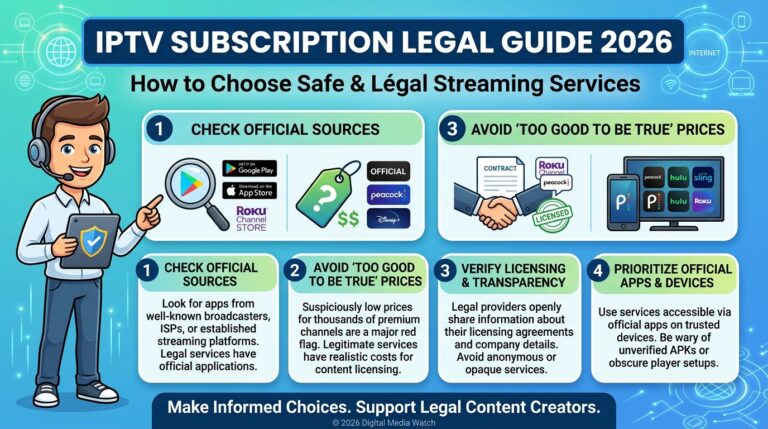
The problem arises when providers distribute copyrighted content without proper licensing. Some IPTV services offer access to premium channels, movies, and sports events at prices that seem too good to be true. In many cases, that’s exactly what they are—unauthorized streams that violate copyright laws.
Using such services can carry risks depending on your country’s regulations. In some regions, authorities focus primarily on shutting down illegal providers, while in others, users may also face penalties. This makes it essential to verify whether a service operates within legal boundaries before subscribing.
A good rule of thumb is transparency. Legitimate IPTV providers are usually upfront about their licensing agreements, pricing structure, and company details. They often have official apps available on recognized platforms like the Google Play Store or Apple App Store. If a service feels secretive or requires unusual payment methods, it’s worth taking a step back.
Another important factor is terms of service compliance. Even with legitimate providers, sharing accounts or exceeding allowed connections can violate usage policies. While this might not have legal consequences, it can result in account suspension.
Ultimately, staying on the right side of the law comes down to informed decision-making. Choosing a reputable IPTV service not only protects you legally but also ensures a more reliable and high-quality viewing experience.
Security and Privacy Concerns
In today’s digital landscape, security and privacy are more important than ever—and IPTV subscription services are no exception. Since these platforms operate online, they inherently involve the transfer of data, which can expose users to potential risks if proper precautions aren’t taken.
One of the main concerns is data privacy. When you sign up for an IPTV service, you often provide personal information such as your email address, payment details, and sometimes even your location. If the provider lacks robust security measures, this data could be vulnerable to breaches or misuse.
Another issue is the use of unverified apps and third-party players. While these tools can enhance functionality, they can also introduce malware or spyware if downloaded from unreliable sources. This is particularly common with unofficial IPTV apps that promise premium features for free.
There’s also the risk of phishing attacks, where users are tricked into providing sensitive information through fake websites or emails. These scams often mimic legitimate IPTV services, making them difficult to पहचान without careful attention.
To mitigate these risks, many users turn to VPNs (Virtual Private Networks). A VPN encrypts your internet connection, adding an extra layer of security and privacy. While it’s not a cure-all solution, it can significantly reduce exposure to potential threats.
Strong passwords, two-factor authentication, and sticking to reputable providers are also essential practices. Think of it like locking your front door—you wouldn’t leave it open, so why take chances with your digital security?
In the end, enjoying IPTV safely comes down to being proactive. With the right precautions, you can minimize risks and focus on what really matters—your entertainment.
How to Choose the Best IPTV Subscription Service
Choosing the right IPTV subscription service can feel like navigating a maze. With so many providers offering similar features at different price points, it’s easy to get overwhelmed. But once you know what to look for, the decision becomes much more manageable.
The first step is identifying your needs. Are you primarily interested in live sports, movies, or international channels? Different services specialize in different areas, so understanding your preferences will help narrow down your options.
Next, consider pricing and value. While it’s tempting to go for the cheapest option, extremely low prices can be a red flag. Instead, focus on what you’re getting for your money—channel variety, streaming quality, device support, and additional features like VOD or catch-up TV.
Reliability is another critical factor. Look for providers with positive user reviews and a reputation for stable performance. Frequent buffering or downtime can quickly ruin your experience, no matter how good the content selection is.
Customer support also plays a bigger role than many people realize. Issues can arise at any time, and having access to responsive support can make a huge difference. Whether it’s live chat, email, or a help center, good support adds an extra layer of confidence.
Trial periods or money-back guarantees are also worth considering. They allow you to test the service before committing long-term, reducing the risk of disappointment.
In essence, choosing the best IPTV service is about finding the right balance between quality, reliability, and value. Take your time, do your research, and prioritize what matters most to you.
Pricing and Subscription Plans
When it comes to selecting an IPTV subscription service, pricing is often the first thing people look at—but it shouldn’t be the only factor. A low price might catch your attention, but the real question is: what are you actually getting for that cost? Understanding how IPTV pricing works can help you avoid disappointment and find a plan that truly matches your expectations.
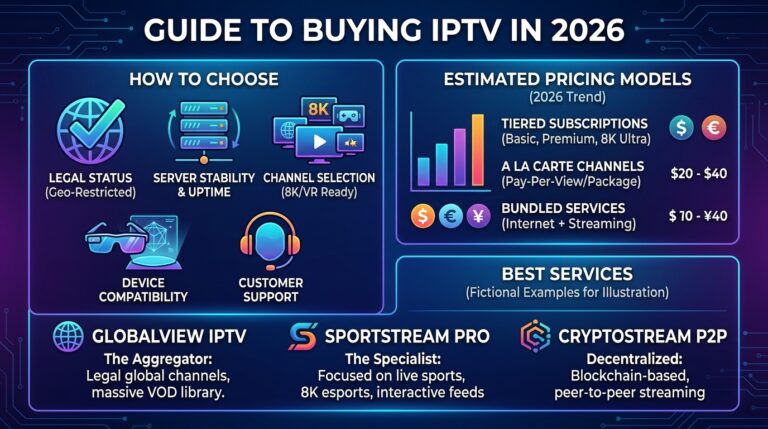
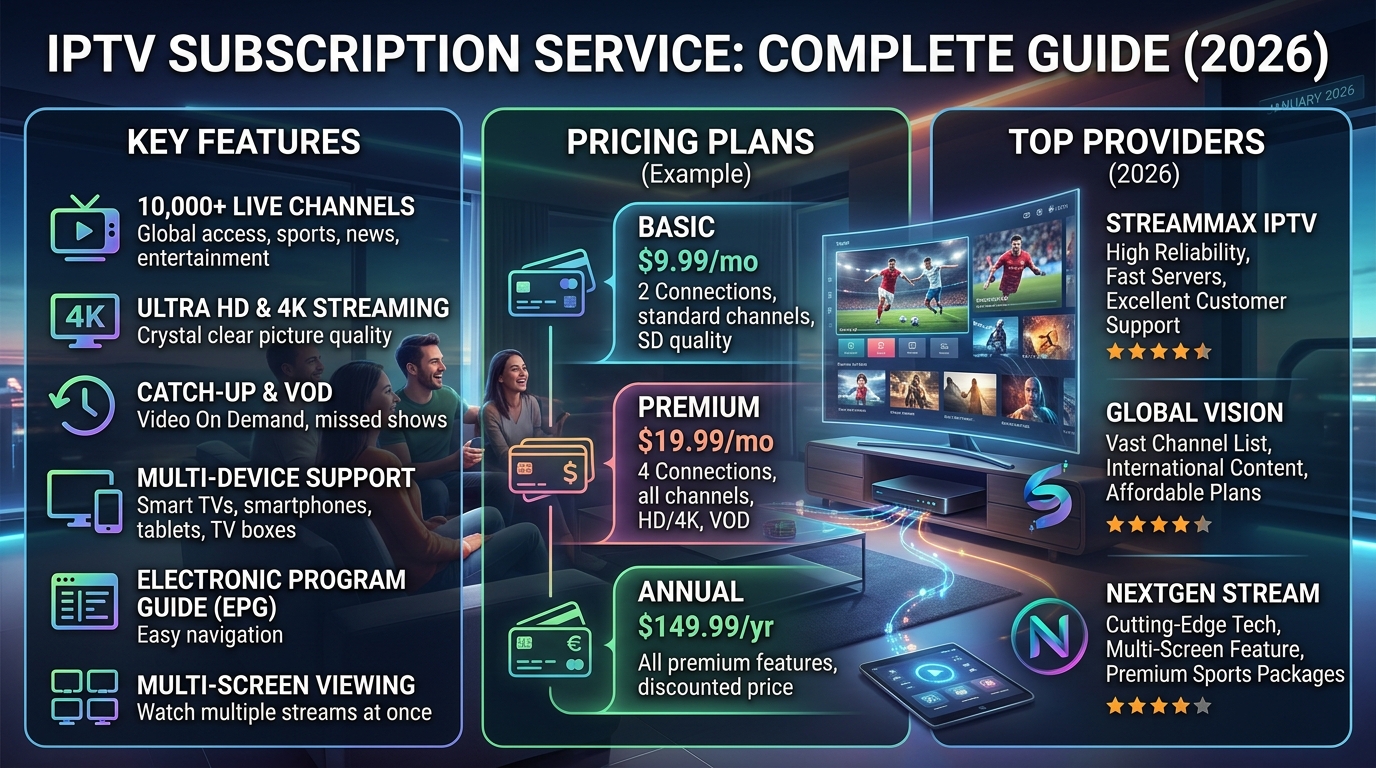
Most IPTV providers offer a range of subscription plans, typically billed monthly, quarterly, or annually. Monthly plans are great for flexibility, especially if you’re testing a service. On the other hand, annual subscriptions often come with significant discounts, sometimes reducing the overall cost by 30–50%. It’s similar to buying in bulk—you pay more upfront but save in the long run.
Here’s a simple comparison to illustrate how pricing can vary:
| Plan Type | Average Cost | Best For |
|---|---|---|
| Monthly | $10–$20 | Short-term users or testing |
| Quarterly | $25–$50 | Moderate commitment |
| Annual | $60–$120 | Long-term savings |
However, pricing isn’t just about duration. It also depends on features like number of channels, VOD access, streaming quality, and simultaneous connections. Some providers charge extra for premium features such as 4K streaming or multi-device usage, while others include them in standard packages.
Another factor to consider is hidden costs. Reputable IPTV services are usually transparent, but some providers may add fees for activation, additional devices, or premium content. Always read the fine print before committing.
Free trials or demo accounts can be incredibly useful here. They allow you to explore the service without financial risk, giving you a clearer idea of whether it’s worth the investment. Think of it like test-driving a car—you wouldn’t buy one without taking it for a spin first.
Ultimately, the best plan isn’t necessarily the cheapest—it’s the one that offers the best balance between cost and value, tailored to your viewing habits.
Customer Support and Reliability
Imagine settling in to watch your favorite show, only to find that your IPTV service isn’t working—and there’s no one to help you fix it. Frustrating, right? That’s why customer support and reliability are two of the most critical factors when choosing an IPTV provider.
Let’s start with reliability. A good IPTV service should offer consistent uptime and stable streaming performance. Occasional hiccups are normal, but frequent outages or buffering issues are a major red flag. Reliable providers invest in strong server infrastructure and content delivery networks to ensure smooth playback, even during peak usage times.
User reviews can be incredibly helpful in gauging reliability. Look for patterns—if multiple users complain about the same issues, it’s probably not a coincidence. On the flip side, consistently positive feedback is a strong indicator of a dependable service.
Customer support is equally important. Even the best services can run into problems, and when they do, you’ll want quick and effective assistance. Top-tier IPTV providers typically offer multiple support channels, such as live chat, email, and ticket systems. Some even provide detailed knowledge bases or video tutorials to help users troubleshoot common issues on their own.
Response time is another key factor. Waiting days for a reply can be incredibly frustrating, especially if you’re dealing with a service interruption. Reliable providers usually respond within hours, if not minutes.
There’s also something to be said for proactive support. Some IPTV services notify users in advance about maintenance or potential disruptions, which helps set expectations and build trust.
In the end, customer support and reliability are what separate a good IPTV service from a great one. They ensure that your experience remains smooth and enjoyable, even when things don’t go perfectly.
Best Devices for IPTV Streaming
One of the reasons IPTV subscription services have become so popular is their versatility across devices. Unlike traditional cable setups that tie you to a single television, IPTV allows you to watch your favorite content on virtually any screen you own. But not all devices deliver the same experience.
Choosing the right device can significantly impact your streaming quality, ease of use, and overall satisfaction. Some devices are optimized for performance, while others prioritize portability or convenience. Understanding these differences can help you get the most out of your IPTV subscription.
From smart TVs and streaming sticks to smartphones and laptops, each option has its own strengths and limitations. The key is finding a setup that aligns with your viewing habits. Are you someone who enjoys watching on a big screen at home, or do you prefer streaming on the go? Your answer will guide your choice.
Another factor to consider is compatibility with IPTV apps and players. Some devices support a wider range of applications, giving you more flexibility in how you access and manage your content.
Ultimately, the best device for IPTV isn’t a one-size-fits-all solution—it’s the one that fits seamlessly into your lifestyle and enhances your viewing experience.
Smart TVs, Firestick, and Android Boxes
For many users, the living room TV remains the primary screen for entertainment. That’s where devices like Smart TVs, Amazon Firestick, and Android TV boxes come into play. These options are designed to deliver a high-quality, immersive IPTV experience right on your big screen.
Smart TVs are the most straightforward option. Many modern models come with built-in app stores that support popular IPTV applications. This means you can install and start streaming without any additional hardware. It’s clean, simple, and perfect for users who prefer a minimal setup.
The Amazon Firestick is another popular choice, especially for its affordability and ease of use. It plugs directly into your TV’s HDMI port and provides access to a wide range of apps, including IPTV players. Its compact design and intuitive interface make it a favorite among beginners and experienced users alike.
Android TV boxes take things a step further by offering more power and customization. These devices run on the Android operating system, allowing you to install a variety of apps and even tweak settings for optimal performance. They’re ideal for users who want more control over their streaming experience.
Each of these options has its own advantages:
- Smart TVs: Convenience and simplicity
- Firestick: Affordability and portability
- Android Boxes: Power and customization
The choice ultimately depends on your preferences and technical comfort level. Regardless of which device you choose, all three options can deliver a smooth and enjoyable IPTV experience when paired with a reliable service.
Mobile Devices and PCs
While big screens offer immersion, mobile devices and PCs bring unmatched flexibility to the IPTV experience. These platforms are perfect for users who want to stay connected to their favorite content, no matter where they are.
Smartphones and tablets are განსაკუთრებით convenient for on-the-go streaming. Whether you’re commuting, waiting in line, or relaxing outdoors, you can access your IPTV service with just a few taps. Most providers offer dedicated mobile apps or support third-party players, ensuring a smooth and user-friendly experience.
One of the biggest advantages of mobile streaming is portability. Your entire entertainment library fits in your pocket, ready to go whenever you are. Pair that with a good pair of headphones, and you’ve got a personal theater experience anywhere.
PCs and laptops, on the other hand, offer a more versatile setup. They’re ideal for users who prefer larger screens than mobile devices but still want the flexibility to move around. Many IPTV services can be accessed through web browsers or specialized software, making setup relatively straightforward.
Another benefit of PCs is multitasking. You can watch a show while browsing the web, working, or chatting with friends. This makes it a great option for users who like to combine entertainment with productivity.
However, performance can vary depending on your device and internet connection. Ensuring you have sufficient processing power and bandwidth is key to avoiding buffering or lag.
In essence, mobile devices and PCs transform IPTV into a portable and adaptable experience, giving you the freedom to watch what you want, wherever you want.
IPTV Setup Guide for Beginners
Getting started with an IPTV subscription service might sound technical at first, but once you break it down, it’s surprisingly straightforward. You don’t need to be a tech expert or spend hours tinkering with settings. In fact, most people can go from zero to streaming in less than 15 minutes if they follow the right steps.
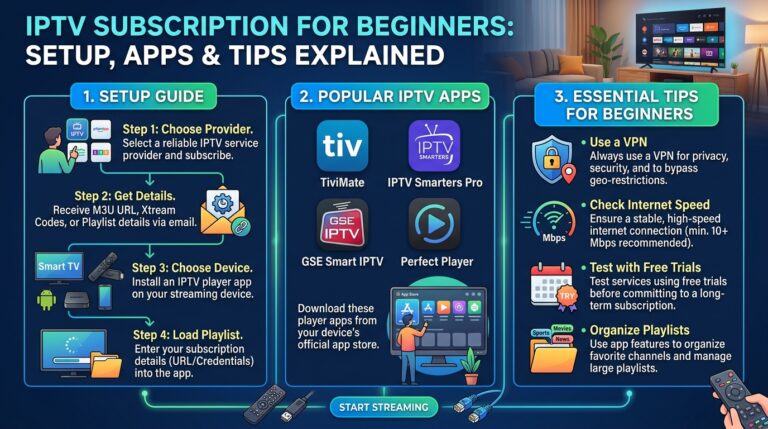
The first thing you need is a reliable IPTV provider. After subscribing, you’ll typically receive login credentials, an M3U playlist URL, or Xtream Codes API details. These are essentially your access keys—they tell your device where to fetch the content from. Think of it like getting a username and password for your entertainment universe.
Next comes choosing your device and app. If you’re using a Smart TV, Firestick, or Android box, you can install apps like IPTV Smarters, TiviMate, or Smart IPTV. For mobile devices and PCs, there are plenty of compatible apps available in app stores or as downloadable software. Once installed, you simply enter your credentials or upload your playlist.
After logging in, the app will load your channels, VOD library, and program guide. This might take a few seconds to a couple of minutes, depending on the size of your subscription. Once everything is loaded, you’re ready to explore.
Here’s where personalization comes in. Most apps allow you to organize channels, create favorites lists, and adjust playback settings. Taking a few minutes to customize your interface can make a big difference in your overall experience. It’s like arranging your living room—once everything is in the right place, it just feels better.
Of course, your internet connection plays a crucial role. A stable Wi-Fi network with sufficient speed ensures smooth streaming. If possible, using an Ethernet connection can further improve performance, especially for high-resolution content.
If something doesn’t work right away, don’t panic. Most issues can be resolved by double-checking your login details, restarting the app, or clearing cache. And if all else fails, a responsive customer support team can guide you through the process.
In the end, setting up IPTV is less about technical skill and more about following simple steps in the right order. Once you’re up and running, the convenience and flexibility make it all worthwhile.
Future of IPTV Subscription Services
The evolution of IPTV subscription services is far from over. In fact, what we’re seeing now is just the beginning of a much larger تحول in how people consume media. As internet infrastructure improves and user expectations continue to rise, IPTV is poised to become the dominant form of television worldwide.
One of the most exciting developments is the integration of artificial intelligence and machine learning. Future IPTV platforms will likely offer even more personalized recommendations, analyzing viewing habits to suggest content with uncanny accuracy. It’s like having a personal curator who knows exactly what you want to watch next.
Another major trend is the rise of interactive and immersive content. With advancements in technologies like virtual reality (VR) and augmented reality (AR), IPTV could evolve beyond passive viewing into fully interactive experiences. Imagine watching a sports game where you can switch camera angles or explore the stadium virtually—it’s not as far-fetched as it sounds.
Improved 5G connectivity is also set to play a significant role. Faster speeds and lower latency will make high-quality streaming more accessible, even on mobile devices. This means fewer buffering issues and a smoother experience overall, regardless of location.
Content diversity will continue to expand as well. As global audiences become more connected, IPTV services will likely offer even broader international libraries, catering to niche interests and cultural preferences. This globalization of content is already underway, and it’s only going to accelerate.
At the same time, regulatory frameworks may become more defined, helping to separate legitimate providers from unauthorized ones. This could lead to a more stable and trustworthy IPTV ecosystem.
In many ways, IPTV represents the natural evolution of television in a digital age. It’s flexible, scalable, and constantly adapting to new technologies. The question isn’t whether IPTV will shape the future of entertainment—it’s how far it will go.
Conclusion
The rise of IPTV subscription services marks a clear shift in how people approach entertainment. What was once a rigid, schedule-driven experience has transformed into something far more dynamic and user-focused. With IPTV, you’re no longer just a viewer—you’re in control.
From live TV and on-demand content to multi-device compatibility and cost savings, IPTV offers a compelling alternative to traditional cable and satellite services. It’s not just about watching more content; it’s about watching smarter and more conveniently.
At the same time, making the most of IPTV requires thoughtful choices. Selecting a reliable provider, ensuring legal compliance, and prioritizing security can make all the difference between a seamless experience and a frustrating one.
As technology continues to evolve, IPTV is set to become even more powerful and intuitive. Whether you’re a casual viewer or a dedicated binge-watcher, it offers a level of flexibility that’s hard to ignore.
FAQs
1. What is the best IPTV subscription service?
The best IPTV service depends on your needs, including channel preferences, budget, and device compatibility. Look for providers with strong reviews, reliable streaming, and good customer support.
2. Is IPTV legal to use?
IPTV itself is legal, but legality depends on whether the provider has proper licensing for the content they offer. Always choose reputable and transparent services.
3. What internet speed do I need for IPTV?
For smooth streaming, at least 10 Mbps is recommended for HD content and 25 Mbps or higher for 4K streaming.
4. Can I use IPTV on multiple devices?
Yes, most IPTV services support multiple devices, but the number of simultaneous connections depends on your subscription plan.
5. Do I need a VPN for IPTV?
A VPN is not always required, but it can enhance privacy and security, especially when using lesser-known providers.