Article Outline
- H1: Best IPTV Subscription in 2026 – Full Guide to Features, Pricing & Setup
- H2: What Is IPTV and How Does It Work?
- H3: Traditional TV vs IPTV
- H3: Types of IPTV Services
- H2: Why IPTV Is Booming in 2026
- H3: Rise of Cord-Cutting
- H3: Demand for On-Demand Content
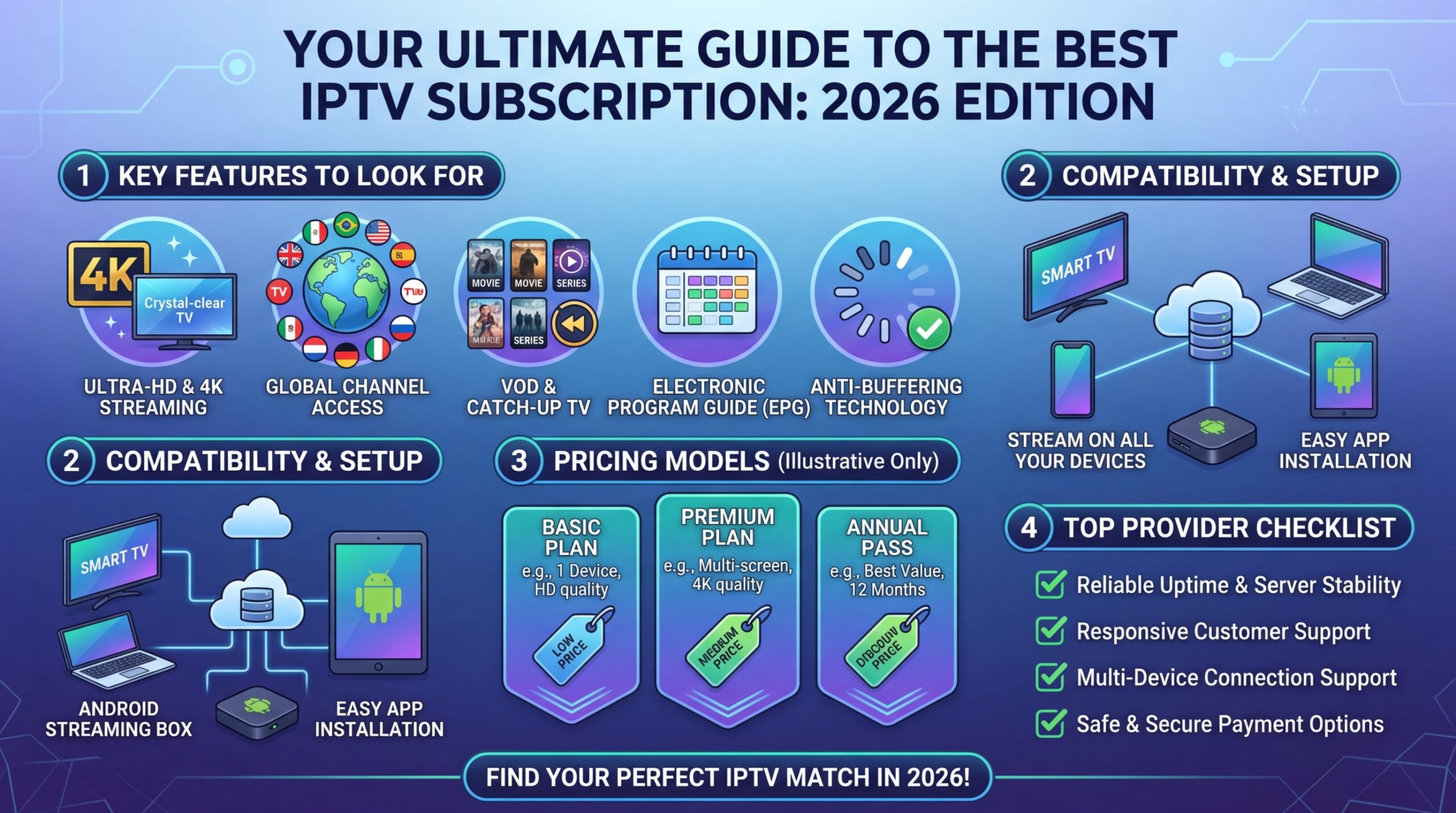
- H2: Key Features to Look for in the Best IPTV Subscription
- H3: Channel Selection and Content Library
- H3: Streaming Quality and Performance
- H3: Device Compatibility
- H2: IPTV Pricing Explained
- H3: Monthly vs Yearly Plans
- H3: Free vs Paid IPTV Services
- H2: Best IPTV Subscription Providers in 2026
- H3: Premium IPTV Services
- H3: Budget-Friendly IPTV Options
- H2: How to Set Up IPTV (Step-by-Step Guide)
- H3: Required Devices and Apps
- H3: Installation and Configuration
- H2: Is IPTV Legal and Safe?
- H3: Legal Considerations
- H3: Safety and Privacy Tips
- H2: Common IPTV Issues and How to Fix Them
- H3: Buffering Problems
- H3: Login and Server Errors
- H2: Conclusion
- H2: FAQs
- H2: What Is IPTV and How Does It Work?
Best IPTV Subscription in 2026 – Full Guide to Features, Pricing & Setup
What Is IPTV and How Does It Work?
If you’ve ever wondered why everyone seems to be ditching cable TV lately, the answer often comes down to one word: IPTV. Short for Internet Protocol Television, IPTV delivers television content over the internet instead of through traditional cable or satellite formats. That might sound technical at first, but in reality, it’s surprisingly simple—if you can stream Netflix, you can use IPTV.
Instead of relying on scheduled broadcasts, IPTV allows you to stream content whenever you want. Think of it like turning your TV into a fully customizable entertainment hub. You’re no longer stuck waiting for your favorite show to air at 8 PM—you just click and watch.
What makes IPTV especially attractive in 2026 is how flexible and powerful it has become. Most services now offer thousands of live TV channels, on-demand movies, and even premium sports packages. And the best part? It’s often significantly cheaper than traditional cable subscriptions.
Another key element is how IPTV uses your internet connection. The stronger and faster your connection, the smoother your viewing experience. That’s why many providers now recommend at least 25 Mbps for HD streaming and even higher for 4K content.
In short, IPTV isn’t just a trend—it’s a complete shift in how we consume entertainment. And once you get used to the freedom it offers, going back to traditional TV feels almost impossible.
Traditional TV vs IPTV
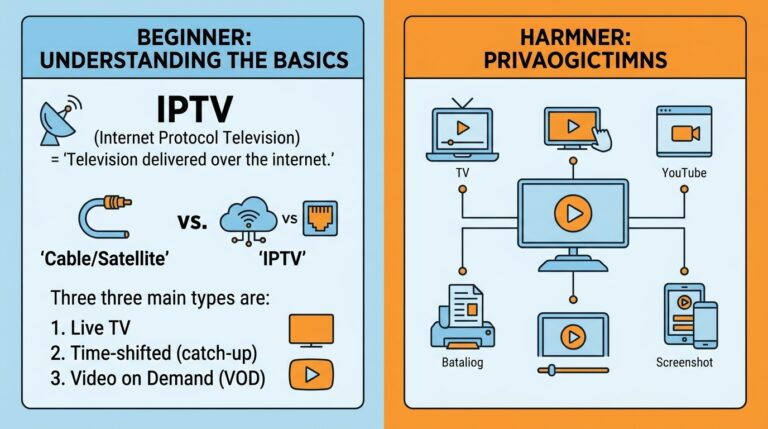
Let’s break this down in a way that actually makes sense. Traditional TV—whether cable or satellite—relies on fixed broadcasting schedules. You pay for bundles of channels, many of which you’ll never watch. It’s like ordering a buffet but only eating one dish.
IPTV flips that model completely. Instead of being tied to a rigid schedule, you get on-demand access to content. Want to binge an entire series in one night? Go ahead. Missed a live match? Replay it instantly.
Another big difference is cost. Traditional cable subscriptions in 2026 can easily exceed $100 per month. In contrast, many IPTV services offer comprehensive packages for as low as $10–$20 monthly. That’s a massive difference, especially for households trying to cut expenses.
Flexibility is another game-changer. IPTV works across multiple devices—Smart TVs, smartphones, tablets, Firestick, and even gaming consoles. Traditional TV? You’re usually stuck with one screen unless you pay extra.
Quality has also improved dramatically. With advancements in internet infrastructure, IPTV now supports HD, Full HD, and even 4K streaming with minimal buffering. In many cases, it actually outperforms cable.
So when you compare the two, IPTV doesn’t just compete—it often wins outright. It’s cheaper, more flexible, and tailored to how people actually watch content today.
Types of IPTV Services
Not all IPTV services are created equal, and understanding the different types can save you a lot of frustration down the road. Broadly speaking, IPTV services fall into three main categories.
First, there’s Live IPTV. This is the closest thing to traditional TV. You get real-time access to channels—news, sports, entertainment, and more. It’s perfect if you still enjoy watching events as they happen.
Then comes Video on Demand (VOD). This is where IPTV really shines. With VOD, you can access a massive library of movies and TV shows anytime you want. It’s like having Netflix, Hulu, and Amazon Prime rolled into one—except often with even more content.
The third type is Time-Shifted Media, sometimes called catch-up TV. Missed a show? No problem. You can watch it later, often within a 24–72 hour window. This feature is especially useful for busy schedules.
Some advanced IPTV providers even combine all three types into a single package, giving you a truly all-in-one experience. That’s why choosing the right provider matters—it determines how seamless and enjoyable your viewing experience will be.
Why IPTV Is Booming in 2026
If it feels like IPTV suddenly exploded in popularity, that’s because it kind of did. Over the past few years, the shift has been dramatic, and 2026 is shaping up to be the peak of that transformation.
Rise of Cord-Cutting
People are cutting the cord—and they’re doing it fast. According to recent industry reports, over 60% of households worldwide have either reduced or completely eliminated their cable subscriptions. That’s a staggering number when you think about how dominant cable once was.
Why is this happening? Simple: people are tired of paying high prices for content they don’t watch. Traditional cable packages often include hundreds of channels, but most viewers regularly watch only a handful. It’s inefficient and expensive.
IPTV offers a smarter alternative. You pay less, get more control, and access content tailored to your interests. It’s like switching from a landline phone to a smartphone—the difference is night and day.
Another factor is accessibility. With IPTV, all you need is an internet connection. There’s no need for installation technicians, satellite dishes, or complicated hardware setups. This convenience alone has driven massive adoption.
And let’s not ignore younger audiences. Millennials and Gen Z grew up with streaming, not cable. For them, IPTV feels natural—it aligns perfectly with their on-demand lifestyle.
Demand for On-Demand Content
We live in a world where waiting feels outdated. Whether it’s food delivery, ride-sharing, or entertainment, everything is expected to be instant—and IPTV delivers exactly that.
On-demand content has become the new standard. People want to watch what they want, when they want, without restrictions. IPTV platforms cater to this demand by offering vast libraries of movies, series, and exclusive content.
Another driving force is global content access. IPTV allows users to watch channels and shows from different countries, breaking down geographical barriers. Want to watch a UK sports channel while living in the US? Totally possible.
The rise of binge-watching culture has also played a huge role. Entire seasons are now consumed in a single sitting, something traditional TV simply can’t support. IPTV makes this effortless.
In many ways, IPTV isn’t just keeping up with consumer behavior—it’s shaping it. It’s redefining what entertainment looks like in the modern age.
Key Features to Look for in the Best IPTV Subscription
Choosing an IPTV service in 2026 can feel overwhelming because there are hundreds of options floating around, all claiming to be “the best.” But here’s the truth—not all IPTV subscriptions are worth your time or money. The difference between a frustrating experience and a seamless one often comes down to a handful of critical features.
The first thing you should think about is reliability. Imagine settling in to watch a big game or your favorite show, only to deal with constant buffering or channels not loading. That’s exactly what happens with low-quality providers. The best IPTV services invest in high-performance servers, often with anti-freeze technology, ensuring smooth streaming even during peak hours.
Another important factor is the Electronic Program Guide (EPG). This might sound minor, but it makes navigation incredibly easy. Instead of randomly clicking through channels, you get a clean, organized TV guide—just like traditional cable but smarter.
Customer support is another underrated feature. Good IPTV providers offer 24/7 support via chat or email, which can be a lifesaver when you run into setup issues or outages. Cheap services often skip this entirely, leaving you stuck.
Lastly, always look for trial options. A 24-hour or 48-hour free trial allows you to test the service before committing. It’s like test-driving a car—you wouldn’t buy it without seeing how it performs first, right?
Channel Selection and Content Library
When it comes to IPTV, content is king—no exceptions. The best IPTV subscriptions in 2026 don’t just offer thousands of channels; they offer the right channels. There’s a big difference between quantity and quality.
A strong IPTV provider typically includes global channel coverage, meaning you get access to content from the US, UK, Canada, Europe, and even niche regions. This is especially valuable if you enjoy international programming or live sports events that aren’t available locally.
Sports fans, in particular, should pay close attention here. Premium IPTV services often include PPV events, NFL, NBA, UFC, and international football leagues. That’s a huge advantage compared to traditional cable, where you’d need multiple subscriptions to access the same content.
Then there’s the Video on Demand (VOD) library. Top-tier services now offer tens of thousands of movies and TV series, updated regularly. We’re talking about everything from classic films to the latest releases. It’s essentially replacing multiple streaming platforms in one place.
However, more isn’t always better. Some providers overload their systems with channels, causing slow performance. A well-balanced service focuses on curated, high-quality content rather than just inflating numbers.
Streaming Quality and Performance
Let’s be honest—no one wants to watch a pixelated screen in 2026. Streaming quality has become a deal-breaker, and rightly so. The best IPTV subscriptions now support HD, Full HD, and 4K Ultra HD streaming, provided your internet connection can handle it.
But quality isn’t just about resolution. Stability matters just as much. A 4K stream that buffers every few seconds is worse than a stable HD stream. That’s why top providers use adaptive bitrate streaming, which adjusts video quality based on your internet speed to prevent interruptions.
Latency is another factor that often goes unnoticed. For live events—especially sports—you want minimal delay. High-quality IPTV services maintain low latency streams, ensuring you’re not 30 seconds behind real-time action.
Server uptime also plays a crucial role. Premium providers guarantee 99.9% uptime, meaning outages are rare. On the flip side, cheaper services often experience frequent downtimes, especially during high-demand events.
In short, performance isn’t just about looking good—it’s about consistency. And in IPTV, consistency is everything.
Device Compatibility
One of IPTV’s biggest advantages is flexibility, but that only matters if your provider supports the devices you actually use. The best IPTV subscriptions in 2026 are designed to work across a wide range of platforms.
Most services support Smart TVs (Samsung, LG), Android devices, iOS devices, Firestick, Roku, and even MAG boxes. Some even offer dedicated apps, while others use popular players like IPTV Smarters or TiviMate.
Multi-device support is another feature worth considering. Many providers allow simultaneous streaming on multiple devices, which is perfect for families or shared households. Imagine watching a movie in the living room while someone else streams sports in the bedroom—no conflicts, no hassle.
Setup simplicity also matters. A good IPTV service provides easy-to-follow setup guides and sometimes even one-click installation options. You shouldn’t need to be a tech expert to get started.
Ultimately, the goal is convenience. The more devices your IPTV supports, the more seamlessly it fits into your daily life.
IPTV Pricing Explained
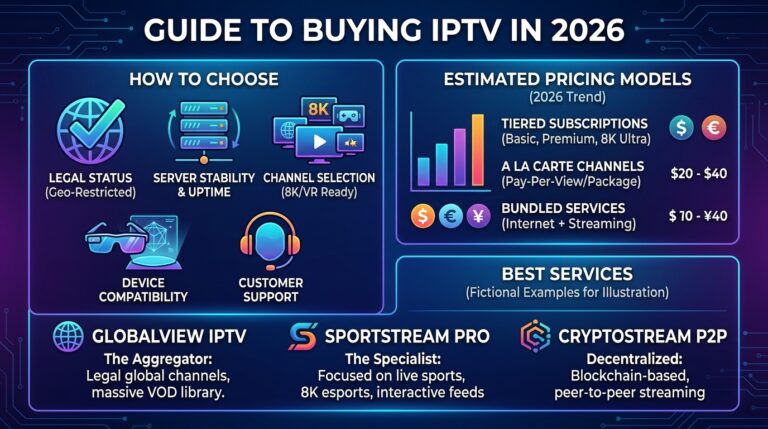
Pricing is often the first thing people look at, and it’s easy to see why. IPTV is known for being cost-effective, but there’s still a wide range of pricing depending on the provider and features.
Monthly vs Yearly Plans
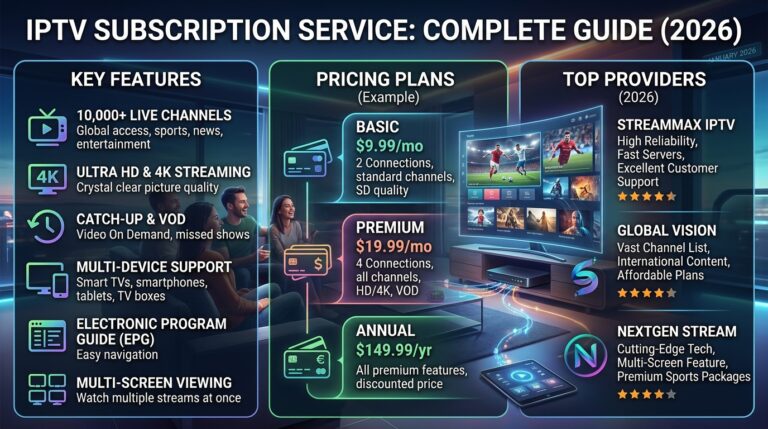
Most IPTV providers offer both monthly and yearly subscription plans, and choosing between them depends on your priorities. Monthly plans are flexible—you can cancel anytime without a long-term commitment. They’re perfect if you’re testing a service or not fully convinced yet.
On the other hand, yearly plans offer significant savings. Many providers give discounts of 30% to 50% when you pay annually. So instead of paying $15 per month, you might pay around $100–$120 per year.
But here’s the catch: committing to a yearly plan without testing the service first can be risky. That’s why it’s always smart to start with a shorter plan or a free trial before going all in.
Another thing to watch for is hidden costs. Some providers advertise low prices but charge extra for features like multi-device access or premium channels. Always read the fine print.
Free vs Paid IPTV Services
Free IPTV sounds tempting—and in some cases, it works—but there’s usually a trade-off. Free services often suffer from poor streaming quality, limited channels, and frequent downtime. It’s like using free Wi-Fi at a crowded café—unreliable and frustrating.
Paid IPTV services, on the other hand, offer a more polished experience. You get better servers, higher-quality streams, and access to premium content. In most cases, paying a small monthly fee saves you a lot of headaches.
Here’s a quick comparison:
| Feature | Free IPTV | Paid IPTV |
|---|---|---|
| Streaming Quality | Low to medium | HD / 4K |
| Reliability | Unstable | Highly stable |
| Channel Selection | Limited | Extensive |
| Support | None | 24/7 Support |
| Ads | Frequent | Minimal or none |
The difference is clear. While free IPTV might work for casual viewing, serious users will benefit far more from a paid subscription.
Best IPTV Subscription Providers in 2026
Finding the best IPTV provider isn’t about picking the most popular name—it’s about finding the one that fits your needs. In 2026, several providers stand out for their performance, content, and reliability.
Premium IPTV Services
Premium IPTV providers are all about delivering a top-tier experience. They offer massive channel lists, high-quality streams, and minimal downtime. These services typically cost a bit more, but the difference in quality is noticeable.
What sets premium providers apart is their infrastructure. They use high-speed global servers, ensuring smooth playback regardless of your location. Many also include advanced features like catch-up TV, cloud DVR, and anti-buffering technology.
Another advantage is customer support. Premium services often provide dedicated support teams, making it easier to resolve issues quickly.
If you’re someone who watches TV regularly or relies on IPTV for sports and live events, investing in a premium service is worth it.
Budget-Friendly IPTV Options
Not everyone wants to spend a lot on IPTV—and that’s perfectly fine. Budget-friendly providers offer a solid middle ground between price and performance.
These services usually cost between $8 and $12 per month and still provide a decent selection of channels and VOD content. While they may not have all the bells and whistles of premium services, they’re more than sufficient for casual viewers.
However, you should still be cautious. Some budget providers cut corners on server quality, which can lead to buffering issues. That’s why it’s important to read reviews and test the service before committing.
A good budget IPTV service strikes a balance—it offers reliable performance without breaking the bank.
How to Set Up IPTV (Step-by-Step Guide)
Getting started with IPTV might sound intimidating at first, especially if you’re not particularly tech-savvy. But here’s the reality—it’s much easier than most people expect. In fact, once you understand the basics, setting up IPTV becomes as routine as installing any app on your phone or TV.
The first thing you need is a stable internet connection. This is the backbone of your IPTV experience. Without it, even the best subscription won’t perform well. Ideally, you should have at least 25 Mbps for HD streaming and 50+ Mbps for 4K content. Think of your internet as the highway—if it’s congested, your content delivery slows down.
Next, you’ll need an IPTV subscription from a reliable provider. Once you sign up, you’ll typically receive login credentials or an M3U playlist URL. This is essentially your access key to the content library.
After that, it’s all about choosing the right app or player. Popular options like IPTV Smarters, TiviMate, and GSE Smart IPTV are widely used because they’re user-friendly and highly compatible. These apps act as the interface between your subscription and your screen.
From there, setup becomes a simple process of entering your credentials or uploading your playlist. Within minutes, you’ll have access to thousands of channels and on-demand content.
What surprises most people is how customizable IPTV is. You can organize channels, create favorites lists, and even integrate external players for better performance. It’s not just TV—it’s your TV, tailored exactly how you like it.
Required Devices and Apps
Before diving into installation, it’s important to make sure you have the right hardware and software. The good news? IPTV works on a wide range of devices, so you probably already own something compatible.
Smart TVs are one of the most popular choices. Brands like Samsung and LG support IPTV apps directly, allowing you to stream without additional hardware. However, if your TV doesn’t support these apps, don’t worry—that’s where streaming devices come in.
Devices like Amazon Firestick, Android TV boxes, Roku, and Apple TV are widely used for IPTV. Among these, Firestick and Android boxes are often preferred because they offer more flexibility and app compatibility.
For mobile users, IPTV apps are available on both Android and iOS, making it easy to watch content on the go. You can literally turn your smartphone into a portable TV.
Here’s a quick breakdown of commonly used apps:
- IPTV Smarters Pro – Beginner-friendly with a clean interface
- TiviMate – Advanced features for power users
- GSE Smart IPTV – Highly customizable
Choosing the right combination of device and app can significantly improve your viewing experience. It’s like pairing the right engine with the right car—you get smoother performance and better results.
Installation and Configuration
Now comes the part most people worry about—but honestly, it’s straightforward if you follow the steps carefully. Installing IPTV is less about technical skill and more about knowing where to click.
First, download your chosen IPTV app from your device’s app store. For example, if you’re using a Firestick, you can install apps directly or sideload them if necessary.
Once the app is installed, open it and look for options like “Add Playlist” or “Login with Xtream Codes.” Most IPTV providers will give you either an M3U URL or Xtream credentials (username, password, and server URL).
Enter your details carefully. A single typo can prevent the app from loading your content. Once everything is entered correctly, the app will start syncing channels and VOD content. This may take a few minutes depending on the size of the library.
After setup, take some time to customize your interface. Organize your favorite channels, adjust playback settings, and explore features like EPG integration.
If something doesn’t work right away, don’t panic. Restarting the app or checking your internet connection solves most issues. And if you’re using a reputable provider, their support team can guide you through any hiccups.
Is IPTV Legal and Safe?
This is one of the most frequently asked questions—and for good reason. IPTV sits in a bit of a gray area, depending on how it’s used and which provider you choose.
Legal Considerations
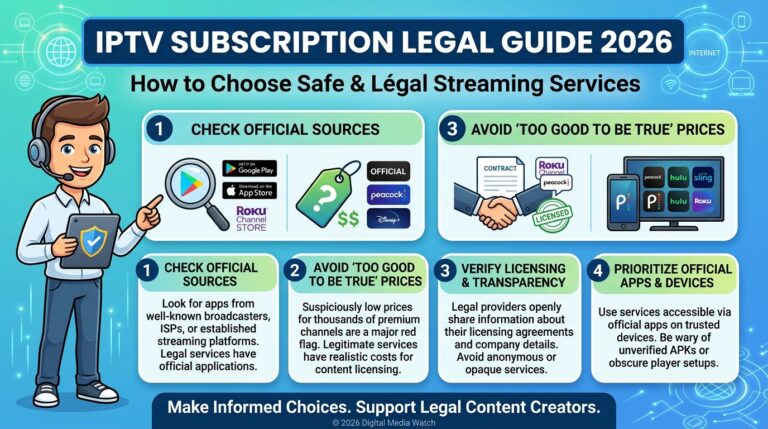
Let’s clear this up: IPTV itself is completely legal. It’s just a technology for delivering content over the internet. The legality depends on whether the provider has the proper rights to distribute that content.
Licensed IPTV services—like those offered by major streaming platforms or telecom companies—are fully legal. They operate just like traditional broadcasters but use internet delivery instead.
However, some unverified IPTV providers offer access to premium channels and content without proper licensing. These services may be cheaper, but they come with potential legal risks depending on your country’s regulations.
That’s why it’s important to do your research. Look for transparency—does the provider clearly state its licensing agreements? Does it have a legitimate online presence?
Using legal IPTV services not only keeps you on the right side of the law but also ensures better quality and reliability. It’s a win-win.
Safety and Privacy Tips
Beyond legality, safety is another major concern. Since IPTV relies on internet streaming, your data and privacy can be at risk if you’re not careful.
One of the simplest ways to protect yourself is by using a VPN (Virtual Private Network). A VPN encrypts your internet traffic, making it harder for third parties to track your activity. It’s like adding a layer of armor to your online presence.
You should also avoid sharing your IPTV credentials. Many providers limit the number of simultaneous connections, and sharing accounts can lead to suspension.
Another tip is to stick with well-reviewed apps and avoid downloading software from unknown sources. Malware and phishing attempts are more common than you might think.
Ultimately, staying safe with IPTV comes down to awareness. Choose reputable providers, protect your data, and stay informed about the services you use.
Common IPTV Issues and How to Fix Them
Even the best IPTV services aren’t completely immune to issues. The difference is knowing how to fix them quickly so they don’t ruin your viewing experience.
Buffering Problems
Buffering is probably the most common complaint—and also the most frustrating. You’re in the middle of a movie or live match, and suddenly everything pauses. Annoying, right?
In most cases, buffering is caused by slow internet speed or network congestion. Start by running a speed test. If your speed is below the recommended level, consider upgrading your plan or switching to a wired connection.
Another common fix is reducing video quality. If you’re streaming in 4K but your internet can’t handle it, switching to HD can make a huge difference.
Sometimes, the issue isn’t on your end. Overloaded servers from your IPTV provider can also cause buffering. This is why choosing a high-quality provider matters.
Clearing your app cache or restarting your device can also help. It’s a simple fix, but surprisingly effective.
Login and Server Errors
Login issues can be confusing, especially if everything was working fine before. The first thing to check is your credentials—make sure there are no typos or expired subscriptions.
Server errors are often temporary and usually occur during maintenance or high traffic periods. Waiting a few minutes and trying again often resolves the issue.
If the problem persists, contact your provider’s support team. A reliable service will respond quickly and help you troubleshoot.
In some cases, switching servers (if your provider offers multiple options) can fix the issue instantly.
Conclusion
IPTV in 2026 isn’t just an alternative to traditional TV—it’s quickly becoming the preferred way to consume content. With its flexibility, affordability, and massive content libraries, it offers a level of convenience that cable simply can’t match.
The key to a great IPTV experience lies in choosing the right provider. Focus on features like streaming quality, device compatibility, and reliable customer support. Don’t be tempted by extremely cheap options without testing them first.
Once you find the right service and set it up properly, IPTV transforms your viewing experience. It puts you in control—what you watch, when you watch, and how you watch.
FAQs
1. What internet speed do I need for IPTV?
For smooth streaming, you’ll need at least 25 Mbps for HD and 50 Mbps for 4K. A stable connection is just as important as speed.
2. Can I use IPTV on multiple devices?
Yes, most IPTV providers allow multi-device usage, but the number of simultaneous streams depends on your subscription plan.
3. Do I need a VPN for IPTV?
While not mandatory, using a VPN is highly recommended for privacy and security, especially with unverified services.
4. Why does my IPTV keep buffering?
Buffering is usually caused by slow internet, server overload, or incorrect app settings. Checking these factors can help resolve the issue.
5. Is IPTV better than Netflix or cable?
IPTV offers more flexibility and a wider range of content, but the best choice depends on your viewing preferences and needs.