Article Outline
- H1: IPTV Subscription: Everything You Need to Know Before Buying (2026 Guide)
- H2: What Is IPTV and How Does It Work?
- H3: The Basic Technology Behind IPTV
- H3: Types of IPTV Services
- H4: Live IPTV
- H4: Video on Demand (VOD)
- H2: Why IPTV Is Booming in 2026
- H3: Shift from Traditional Cable to Streaming
- H3: Cost Efficiency and Flexibility
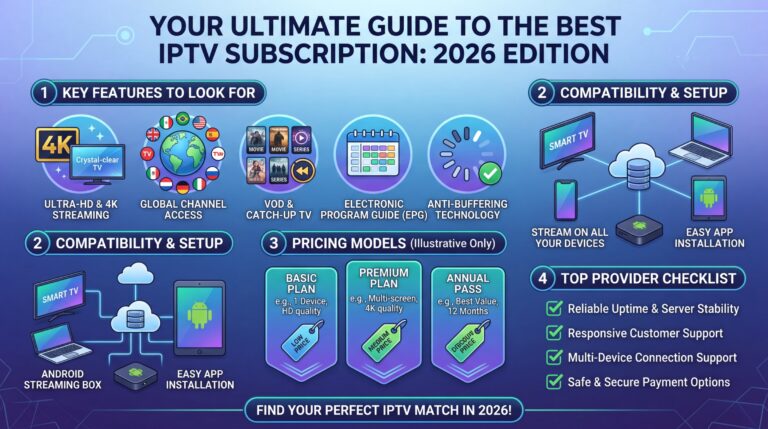
- H2: Key Features to Look for in an IPTV Subscription
- H3: Channel Variety and Content Library
- H3: Streaming Quality and Performance
- H3: Device Compatibility
- H2: Legal vs Illegal IPTV Services
- H3: How to Identify Legal IPTV Providers
- H3: Risks of Using Illegal IPTV
- H2: Pricing and Subscription Plans Explained
- H3: Monthly vs Yearly Plans
- H3: Hidden Costs to Watch Out For
- H2: Best Devices for IPTV Streaming
- H3: Smart TVs and Streaming Devices
- H3: Mobile and Desktop Viewing Options
- H2: How to Choose the Best IPTV Provider
- H3: Customer Support and Reliability
- H3: User Reviews and Trial Options
- H2: Common Problems and How to Fix Them
- H3: Buffering Issues
- H3: Channel Not Working Errors
- H2: Conclusion
- H2: FAQs
- H2: What Is IPTV and How Does It Work?
IPTV Subscription: Everything You Need to Know Before Buying (2026 Guide)
What Is IPTV and How Does It Work?
The Basic Technology Behind IPTV
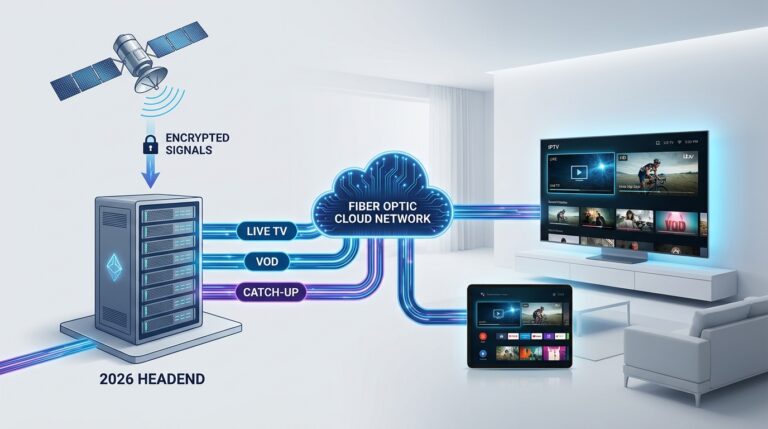
If you’ve ever wondered how people are watching thousands of channels without a satellite dish or cable box, the answer lies in IPTV (Internet Protocol Television). Instead of broadcasting content through traditional formats like cable or satellite, IPTV delivers television content over the internet. That means everything you watch—live sports, movies, or even international channels—is streamed directly to your device through an internet connection.
Think of IPTV like Netflix, but supercharged. Instead of just on-demand content, it also gives you access to live TV channels from around the world. The technology works by breaking down video signals into data packets and sending them over IP networks. These packets are then reassembled on your device in real-time, allowing seamless playback.
One of the biggest advantages of IPTV is its on-demand nature. Unlike cable TV, where you’re tied to a broadcast schedule, IPTV allows you to watch what you want, when you want. It also enables features like pause, rewind, and record—something traditional TV struggled to offer consistently.
Another key component is the set-top box or app. IPTV services usually require an application like IPTV Smarters, TiviMate, or a proprietary app from the provider. Once you log in with your subscription credentials, you gain access to the content library instantly.
The rise of high-speed internet—especially fiber and 5G—has made IPTV more reliable than ever. According to recent reports, over 60% of households globally now prefer streaming over traditional cable, and IPTV plays a huge role in that shift. It’s fast, flexible, and tailored for modern viewers who hate being tied down.
Types of IPTV Services
Live IPTV
Live IPTV is what most people imagine when they think of television. It allows you to stream live broadcasts in real-time, just like traditional TV—but without the need for satellite dishes or cables. Whether it’s live sports, breaking news, or your favorite reality show, everything is accessible through an internet connection.
What makes live IPTV stand out is the sheer global reach. You’re no longer limited to local channels. Want to watch UK football, US news, or Asian entertainment? It’s all available at your fingertips. This level of access was nearly impossible with traditional cable packages unless you paid a premium.
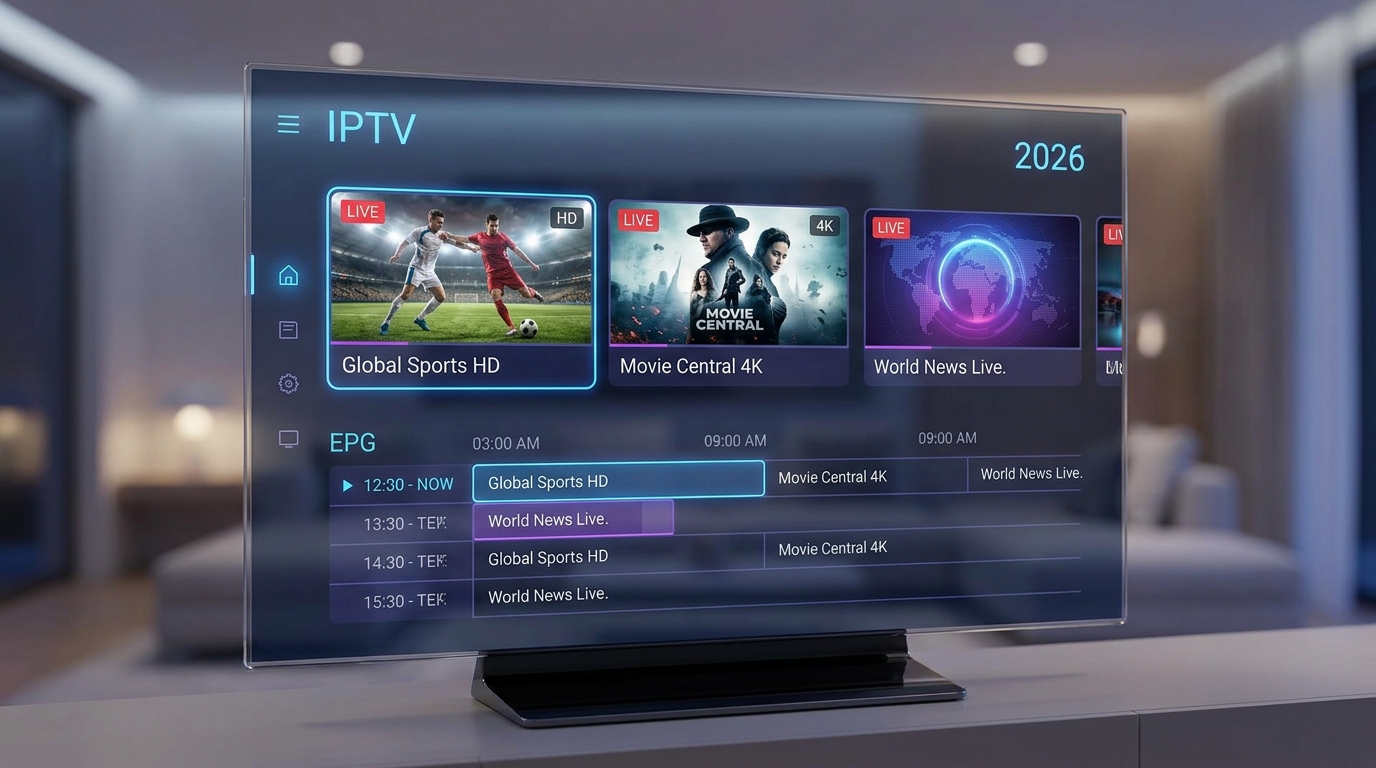
Another benefit is the interactive experience. Many IPTV services include electronic program guides (EPG), allowing you to browse channels, schedule recordings, and even set reminders. It’s like having a personalized TV assistant built into your screen.
However, live IPTV does depend heavily on internet speed. A slow or unstable connection can result in buffering or lag, especially during high-demand events like sports finals. That’s why most providers recommend at least 15–25 Mbps for HD streaming and higher for 4K.
Video on Demand (VOD)
If live IPTV is like traditional TV, then Video on Demand (VOD) is your personal cinema. This feature allows you to watch movies, TV shows, and series whenever you want—no schedules, no waiting. Just click and play.
VOD libraries can be massive, often containing thousands of titles across genres like action, drama, comedy, and documentaries. Some IPTV providers even update their libraries daily, ensuring you always have fresh content to explore. It’s like having Netflix, Amazon Prime, and Disney+ rolled into one—but often at a fraction of the cost.
The beauty of VOD lies in its flexibility. You can pause, rewind, fast-forward, or rewatch content as many times as you want. This makes it perfect for binge-watching or catching up on missed episodes.
But here’s the catch—not all VOD libraries are created equal. Some providers offer outdated or low-quality content. That’s why it’s crucial to choose a provider with a well-maintained and regularly updated library.
Why IPTV Is Booming in 2026
Shift from Traditional Cable to Streaming
Walk into almost any living room in 2026, and you’ll notice something missing—the bulky cable box. It’s not an accident. The shift from traditional cable TV to IPTV and streaming services has been happening for years, but now it’s hitting full speed. People are cutting the cord in record numbers, and honestly, it makes perfect sense when you look at the bigger picture.
Cable TV used to dominate because it was the only reliable way to access a wide range of channels. But it came with limitations—fixed schedules, expensive packages, long-term contracts, and tons of channels you never actually watched. IPTV flips that entire model on its head. Instead of paying for hundreds of irrelevant channels, you get customized access to what you actually want.
Another driving force behind this shift is content accessibility. With IPTV, geographical boundaries basically disappear. You’re no longer restricted by your region. Want to watch US Netflix-style content while living in Europe? Or follow international sports leagues without blackout restrictions? IPTV makes that possible in a way cable simply can’t.
There’s also the rise of multi-device consumption. People aren’t just watching TV on their living room screens anymore. They’re watching on smartphones during commutes, tablets in bed, and laptops at work (don’t worry, no judgment). IPTV supports all of this seamlessly, making it far more aligned with modern lifestyles.
Industry data supports this trend. Recent reports suggest that global IPTV subscribers are expected to surpass 1.2 billion by the end of 2026, driven largely by improved internet infrastructure and consumer demand for flexible entertainment. Cable isn’t dead—but it’s definitely losing ground fast.
Cost Efficiency and Flexibility
Let’s talk money—because this is where IPTV really grabs attention. Traditional cable subscriptions can easily run anywhere from $70 to $150 per month, especially if you add premium channels or sports packages. IPTV, on the other hand, often delivers more content at a fraction of the cost.
Most IPTV subscriptions range between $10 and $25 per month, depending on the provider and features. That’s a massive difference. And it’s not just about saving money—it’s about getting better value. With IPTV, you’re often getting thousands of live channels, VOD content, and premium features bundled into one plan.
Flexibility is another game-changer. Unlike cable contracts that lock you in for 12 or 24 months, many IPTV services offer month-to-month subscriptions. This means you can cancel anytime without penalties. It’s a low-risk way to test different providers and find one that fits your needs.
There’s also flexibility in how you watch. Want to start a movie on your TV and finish it on your phone? No problem. Need multiple connections for different family members? Many providers offer that too. It’s like designing your own entertainment system without being boxed into rigid packages.
But here’s something people often overlook—time is money too. IPTV eliminates the need for installation appointments, technician visits, and hardware setup headaches. You can be up and running in minutes, which adds to its overall convenience.
In a world where consumers demand more control, better pricing, and personalized experiences, IPTV isn’t just an alternative—it’s becoming the preferred choice.
Key Features to Look for in an IPTV Subscription
Channel Variety and Content Library
Not all IPTV subscriptions are created equal, and if there’s one thing that separates a great service from a mediocre one, it’s the breadth and quality of its content library. After all, what’s the point of subscribing if you can’t find what you actually want to watch?
A high-quality IPTV provider should offer a diverse range of channels, including sports, news, entertainment, kids’ programming, and international content. The more variety, the better—especially if you have a household with different viewing preferences. Some services boast over 10,000 channels, but numbers alone can be misleading. It’s not just about quantity; it’s about relevance and reliability.
The Video on Demand (VOD) section is equally important. A strong VOD library should include recent movies, trending TV series, and even older classics. The best providers update their libraries frequently, sometimes daily, to keep up with new releases. If a service hasn’t updated its content in months, that’s a red flag.
Another feature to look for is Electronic Program Guide (EPG) support. This makes navigation easier by showing what’s currently playing and what’s coming next. Without it, browsing channels can feel like flipping through static.
Language and regional options also matter. Whether you’re looking for local channels or international programming, a good IPTV service should cater to a global audience. This is especially useful for expats or multilingual households.
Ultimately, your goal is to find a provider that aligns with your viewing habits. Think about what you actually watch—sports, movies, news—and choose a service that delivers those consistently.
Streaming Quality and Performance
Let’s be honest—nothing kills the viewing experience faster than buffering. You could have access to thousands of channels, but if the stream keeps freezing, it’s basically useless. That’s why streaming quality and performance should be at the top of your checklist when choosing an IPTV subscription.
Most reputable IPTV providers offer multiple streaming resolutions, including HD, Full HD, and even 4K. But here’s the catch—just because a provider advertises 4K doesn’t mean it delivers consistently. The real test is stability. You want smooth playback with minimal interruptions, even during peak hours.
Server quality plays a huge role here. Good providers use high-performance servers with load balancing, ensuring that streams remain stable even when thousands of users are online. Some even offer anti-freeze technology to reduce buffering.
Your internet connection also matters. For standard definition, 5–10 Mbps might be enough. But for HD and 4K streaming, you’ll need at least 20–50 Mbps for optimal performance. A wired Ethernet connection is usually more stable than Wi-Fi, especially for high-resolution content.
Another underrated factor is latency. If you’re watching live sports, even a few seconds of delay can be frustrating—especially if your neighbor is celebrating a goal before you even see it happen.
Before committing to a subscription, it’s always a good idea to test the service. Many providers offer free trials or short-term plans, giving you a chance to evaluate performance firsthand.
Device Compatibility
Imagine subscribing to an IPTV service only to realize it doesn’t work on your favorite device. Frustrating, right? That’s why device compatibility is something you should never overlook.
The best IPTV services are designed to work across a wide range of devices. This includes Smart TVs (Samsung, LG), Android TV boxes, Amazon Fire Stick, Apple TV, smartphones, tablets, and even desktop computers. The more flexible the service, the better your overall experience.
Apps play a crucial role here. Popular IPTV apps like TiviMate, IPTV Smarters, and GSE Smart IPTV provide user-friendly interfaces and additional features like recording and multi-screen viewing. Some providers also offer their own dedicated apps, which can be more optimized for their service.
Multi-device support is another big plus. Many subscriptions allow you to use multiple connections simultaneously, meaning different family members can watch different content at the same time. This is especially useful in households with diverse tastes.
Compatibility also extends to operating systems. Whether you’re using Android, iOS, Windows, or macOS, your IPTV service should work seamlessly across platforms.
At the end of the day, IPTV is all about convenience. And the more devices you can use it on, the more value you get from your subscription.
Legal vs Illegal IPTV Services
How to Identify Legal IPTV Providers
Here’s where things get a bit tricky—and honestly, a lot of people gloss over this part until it’s too late. Not every IPTV service operates within legal boundaries, and knowing how to separate legitimate providers from questionable ones can save you from serious headaches down the road.
A legal IPTV provider has proper licensing agreements to distribute the content it offers. This means they’ve paid for the rights to stream TV channels, movies, and shows. Examples include well-known platforms like YouTube TV, Hulu + Live TV, and Sling TV. These services are transparent about their partnerships and usually operate under recognizable brand names.
So how can you spot a legitimate IPTV service? First, look at the pricing structure. If a provider is offering 10,000+ premium channels, including pay-per-view sports and premium movie networks, for just a few dollars a month, that should raise eyebrows. Licensing content is expensive—there’s no way around it.
Another sign is official apps and availability. Legal providers are typically available on major app stores like Google Play, Apple App Store, or Amazon Appstore. They also have professional websites, clear terms of service, and responsive customer support.
Payment methods can also be revealing. Legitimate services accept standard payment options like credit cards or PayPal. If a provider only accepts cryptocurrency or obscure payment methods, it’s worth questioning why.
Transparency is key. Legal IPTV services clearly state what you’re getting, how it works, and who they are. If you find yourself digging through vague descriptions or unclear offerings, it’s probably not a good sign.
Risks of Using Illegal IPTV
Let’s not sugarcoat it—using illegal IPTV services might seem like a bargain, but it comes with real risks. And no, it’s not just about breaking the rules; it can affect your privacy, security, and overall experience.
First, there’s the legal risk. Many countries have started cracking down on unauthorized streaming services, and users are not always exempt. While enforcement varies, there have been cases where users received fines or warnings for accessing pirated content.
Then there’s the issue of security. Illegal IPTV providers often operate in unregulated environments, which means your data isn’t protected. You could be exposing your personal information, payment details, or even your IP address to unknown third parties. Some services have been linked to malware or phishing attempts, which is a risk you definitely don’t want to take.
Reliability is another major concern. These services can disappear overnight without warning. One day everything works fine, and the next day your subscription is gone—with no refunds or customer support to help you out.
There’s also the quality factor. Streams may be unstable, channels may go offline frequently, and the overall user experience can be frustrating. What looks like a great deal upfront can quickly turn into a constant battle with buffering and broken links.
In short, if something feels too good to be true, it probably is. Paying a little more for a legitimate service often saves you a lot of trouble in the long run.
Pricing and Subscription Plans Explained
Monthly vs Yearly Plans
When it comes to choosing an IPTV subscription, pricing isn’t just about how much you pay—it’s about how you pay. Most providers offer both monthly and yearly plans, and each comes with its own set of advantages and trade-offs.
Monthly plans are all about flexibility. You pay a smaller amount upfront, usually between $10 and $20, and you’re free to cancel anytime. This is perfect if you’re still testing out different providers or if you don’t want to commit long-term. It’s also a safer option if you’re unsure about the service quality.
On the other hand, yearly plans offer significant cost savings. Many providers give discounts of 20–50% when you pay annually. For example, a service that costs $15 per month might offer a yearly plan for around $120, saving you a decent chunk of money.
But here’s the catch—commitment. Once you pay for a year, you’re locked in. If the service quality drops or the provider disappears, getting a refund can be difficult or even impossible. That’s why it’s usually a good idea to start with a monthly plan before upgrading.
Another factor to consider is renewal policies. Some services automatically renew your subscription, while others require manual renewal. Always read the fine print so you’re not caught off guard.
Ultimately, the best choice depends on your confidence in the provider. If you’ve tested the service and you’re happy with it, a yearly plan can be a smart investment. If not, stick with monthly until you’re sure.
Hidden Costs to Watch Out For
At first glance, IPTV subscriptions can look incredibly affordable. But just like with anything else, there can be hidden costs that sneak up on you if you’re not paying attention.
One common extra is multi-connection fees. Many providers advertise a base price for a single connection, but if you want to use the service on multiple devices at the same time, you’ll need to pay extra. This can add up quickly, especially for larger households.
Another potential cost is premium content access. Some providers charge additional fees for specific channels, sports packages, or pay-per-view events. So while the base subscription might seem cheap, accessing the content you actually want could cost more.
You might also need to invest in compatible hardware. Devices like Amazon Fire Stick, Android TV boxes, or high-performance routers aren’t always included, and they can add to your initial setup cost.
VPN services are another consideration. While not always necessary, some users choose to use a VPN for privacy or to access geo-restricted content. This adds an extra monthly or yearly expense.
Here’s a quick breakdown:
| Cost Type | Description |
|---|---|
| Multi-connection | Extra fee for multiple devices |
| Premium channels | Additional charges for special content |
| Hardware | Devices required for streaming |
| VPN | Optional but often recommended |
Understanding these costs upfront helps you avoid surprises and choose a plan that truly fits your budget.
Best Devices for IPTV Streaming
Smart TVs and Streaming Devices
When it comes to enjoying IPTV, your device can make or break the experience. A powerful, compatible device ensures smooth playback, better picture quality, and an overall more enjoyable viewing session.
Smart TVs are one of the most convenient options. Brands like Samsung and LG come with built-in app stores where you can download IPTV apps directly. This eliminates the need for additional hardware, making setup quick and easy.
Streaming devices are another popular choice. Devices like Amazon Fire Stick, Roku, and Apple TV offer more flexibility and often better performance than built-in TV apps. The Fire Stick, in particular, has become a favorite among IPTV users due to its affordability and compatibility with a wide range of apps.
Android TV boxes are also worth considering. They offer more customization options and support a variety of IPTV applications. If you’re someone who likes to tweak settings and optimize performance, this might be the way to go.
The key is to choose a device that supports high-resolution streaming and has enough processing power to handle it. A laggy interface or slow loading times can quickly ruin the experience.
Mobile and Desktop Viewing Options
IPTV isn’t just for your living room—it’s designed to go wherever you go. That’s where mobile and desktop compatibility comes into play.
Smartphones and tablets allow you to watch your favorite content on the move. Whether you’re commuting, traveling, or just relaxing in bed, IPTV apps make it easy to stay connected. Most services offer dedicated apps for both Android and iOS, ensuring a smooth experience across devices.
Desktop and laptop viewing is equally important, especially for those who prefer larger screens or multitasking. Many IPTV services support web players or desktop applications, making it easy to watch content while working or browsing.
One of the biggest advantages here is syncing and continuity. You can start watching something on your TV and continue on your phone without missing a beat. It’s a level of convenience that traditional TV simply can’t match.
At the end of the day, the more ways you can access your IPTV service, the more value you get from it.
How to Choose the Best IPTV Provider
Customer Support and Reliability
Choosing an IPTV provider isn’t just about channels and pricing—it’s about trust. Because let’s be honest, even the best services can run into issues. When that happens, customer support and reliability become the real deciding factors between a frustrating experience and a smooth one.
A reliable IPTV provider should offer consistent uptime, meaning their servers are stable and rarely go down. You don’t want to sit down for a big game or your favorite show only to find that the service isn’t working. Top-tier providers invest in high-performance servers and backup systems, ensuring minimal downtime even during peak usage hours.
Customer support is where many providers either shine or completely fail. Look for services that offer 24/7 support through multiple channels—live chat, email, or even Telegram and WhatsApp groups. Fast response times matter. If you’re stuck with buffering issues or login problems, waiting days for a reply just isn’t acceptable.
Another sign of a good provider is clear communication. They should provide setup guides, FAQs, and troubleshooting resources that are easy to understand. This not only helps you get started quickly but also empowers you to fix minor issues on your own.
Reliability also extends to service consistency. A provider might work great during your trial period but deteriorate afterward. That’s why it’s important to monitor performance over time before committing long-term.
Think of it like choosing a gym—you don’t just look at the equipment; you also care about cleanliness, staff support, and overall experience. IPTV is no different.
User Reviews and Trial Options
If you’ve ever bought something online, you already know how powerful reviews can be. The same applies to IPTV subscriptions. User reviews and trial options give you a glimpse into what you can expect—beyond the marketing promises.
Start by checking independent review platforms, forums, and Reddit communities. These places often have honest, unfiltered opinions from real users. Look for patterns rather than isolated complaints. If multiple users mention buffering issues or poor support, that’s a red flag.
Trial options are your best friend here. Many IPTV providers offer free trials or short-term plans, allowing you to test the service before making a commitment. This is your chance to evaluate channel availability, streaming quality, and overall usability.
During the trial, pay attention to:
- Stream stability during peak hours
- Channel loading speed
- VOD library quality
- App interface and ease of use
Don’t rush this process. Spend a few days exploring the service as you normally would. Watch different types of content, switch devices, and test various features.
Another tip—be cautious of overly perfect reviews. If everything sounds too good to be true, it probably is. Authentic feedback usually includes both pros and cons.
At the end of the day, choosing the right IPTV provider is about balancing features, price, and reliability. And the more research you do upfront, the fewer regrets you’ll have later.
Common Problems and How to Fix Them
Buffering Issues
Ah, buffering—the ultimate mood killer. You’re right in the middle of an intense scene or a crucial match, and suddenly the screen freezes. Frustrating, right? The good news is that buffering issues are usually fixable, and understanding the root cause can save you a lot of headaches.
The most common reason for buffering is a slow or unstable internet connection. IPTV streaming requires consistent bandwidth, especially for HD and 4K content. If your connection drops or fluctuates, the stream struggles to keep up.
Start by checking your internet speed. Ideally, you should have:
- At least 15 Mbps for HD streaming
- 25–50 Mbps for 4K content
If your speed is fine, the issue might be your Wi-Fi connection. Wireless signals can be affected by distance, walls, and interference from other devices. Switching to a wired Ethernet connection often improves stability significantly.
Another factor is server overload. If too many users are accessing the same server, performance can drop. In this case, switching to a different server (if your provider offers multiple options) can help.
Clearing your app cache, updating your IPTV app, or restarting your device can also resolve minor glitches. And if all else fails, contacting customer support is always a good move.
Buffering isn’t always avoidable, but with the right setup, you can minimize it to the point where it’s barely noticeable.
Channel Not Working Errors
You click on a channel, expecting it to load instantly—but instead, you’re met with an error or a blank screen. It’s a common issue with IPTV, but again, it’s usually not as complicated as it seems.
One of the main reasons is outdated playlists or links. IPTV providers often update their channel URLs, and if your app hasn’t refreshed the playlist, some channels may stop working. Reloading or updating your playlist can fix this quickly.
Another possibility is temporary server downtime. Channels can go offline for maintenance or due to technical issues. In most cases, they come back within a few hours.
App compatibility can also play a role. If you’re using an outdated or unsupported app, certain channels might not function properly. Switching to a more reliable app like TiviMate or IPTV Smarters can make a big difference.
Sometimes, the issue is region-based. Certain channels may be restricted depending on your location. In such cases, using a VPN can help bypass these limitations.
Here’s a quick troubleshooting checklist:
| Issue | Possible Fix |
|---|---|
| Channel not loading | Refresh playlist |
| Black screen | Restart app/device |
| Specific channels down | Wait or contact provider |
| Regional restriction | Use VPN |
Most importantly, don’t panic. IPTV isn’t perfect, but with a little patience and basic troubleshooting, most issues can be resolved quickly.
Conclusion
IPTV has completely transformed the way people consume entertainment, and by 2026, it’s clear that this isn’t just a trend—it’s the future. With its flexibility, affordability, and massive content libraries, IPTV offers a level of control that traditional cable simply can’t match.
But here’s the thing—not all IPTV subscriptions are worth your money. The difference between a great experience and a frustrating one often comes down to the choices you make before subscribing. From understanding how IPTV works to evaluating providers, pricing, legality, and device compatibility, every detail matters.
If you approach it wisely—testing services, reading reviews, and prioritizing quality over cheap deals—you can unlock an entertainment experience that feels tailored just for you. No contracts, no limitations, just content on your terms.
FAQs
1. Is IPTV legal in 2026?
Yes, IPTV itself is legal. However, legality depends on the provider. Licensed services are legal, while unauthorized providers streaming copyrighted content without permission are not.
2. What internet speed do I need for IPTV?
For smooth streaming, you need at least 15 Mbps for HD and 25–50 Mbps for 4K content. A stable connection is just as important as speed.
3. Can I use IPTV on multiple devices?
Yes, many IPTV providers offer multi-device support. However, you may need to pay extra for multiple simultaneous connections.
4. Do I need a VPN for IPTV?
A VPN is optional but recommended for privacy and accessing geo-restricted content. It can also improve security when using certain services.
5. What is the best device for IPTV?
Popular options include Amazon Fire Stick, Android TV boxes, and Smart TVs. The best choice depends on your preferences and budget.