Article Outline (Tree Hierarchy)
- H1: How to Choose the Best IPTV Subscription for Your Needs (Beginner Guide) 2026
- H2: What Is IPTV and How Does It Work?
- H3: Understanding IPTV Technology
- H3: Types of IPTV Services
- H2: Why IPTV Is Becoming Popular in 2026
- H3: Shift from Cable to Streaming
- H3: Benefits Over Traditional TV
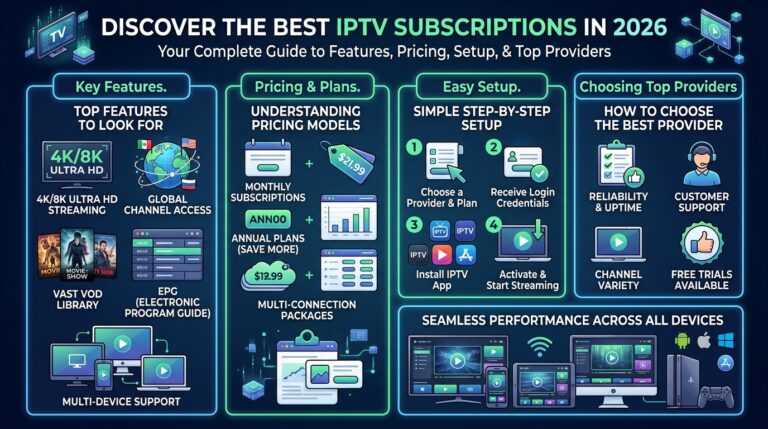
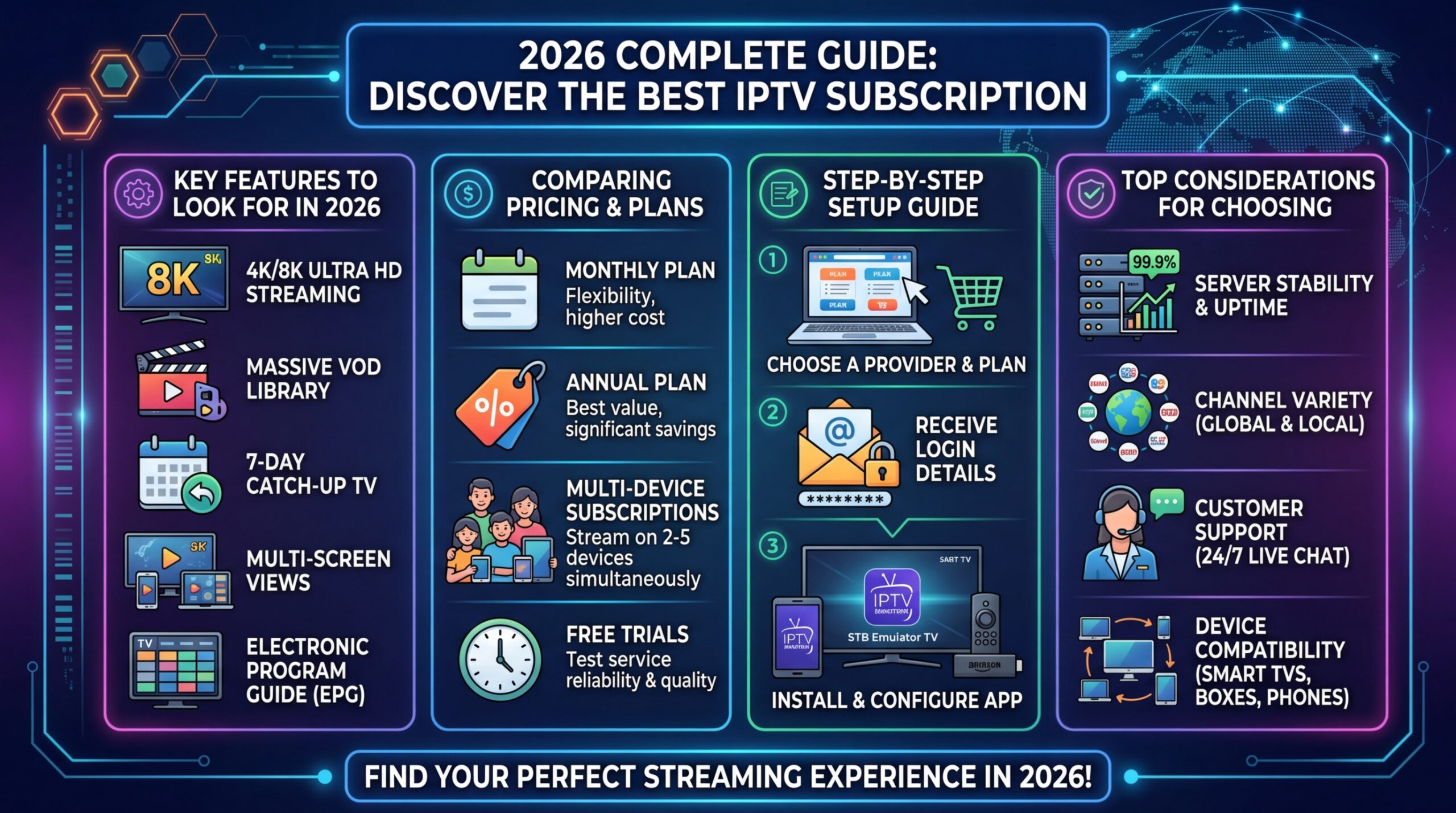
- H2: Key Features to Look for in an IPTV Subscription
- H3: Channel Selection and Categories
- H3: Video Quality and Streaming Stability
- H3: Device Compatibility
- H2: Pricing and Subscription Plans Explained
- H3: Monthly vs Yearly Plans
- H3: Free Trials and Refund Policies
- H2: Legal vs Illegal IPTV Services
- H3: How to Identify Legitimate Providers
- H3: Risks of Using Unverified IPTV
- H2: Internet Requirements for IPTV
- H3: Minimum Speed Recommendations
- H3: Role of VPN in IPTV Usage
- H2: Best IPTV Devices for Beginners
- H3: Smart TVs and Apps
- H3: Streaming Devices (Firestick, Android Box)
- H2: Customer Support and User Experience
- H3: Importance of Reliable Support
- H3: User Interface and Ease of Use
- H2: Comparing IPTV Providers (Quick Table)
- H2: Final Tips for Choosing the Right IPTV Subscription
- H2: Conclusion
- H2: FAQs
- H2: What Is IPTV and How Does It Work?
📺 How to Choose the Best IPTV Subscription for Your Needs (Beginner Guide) 2026
What Is IPTV and How Does It Work?
Understanding IPTV Technology
If you’ve ever streamed Netflix, YouTube, or even a live sports match online, you’ve already dipped your toes into the world of IPTV (Internet Protocol Television)—you just might not have realized it. IPTV is essentially a way of delivering television content over the internet instead of through traditional cable or satellite systems. Sounds simple, right? But under the hood, it’s a pretty powerful shift in how we consume media.
Unlike traditional broadcasting methods that send signals in a fixed schedule, IPTV allows you to stream content on demand or in real-time using your internet connection. Think of it like ordering food from a menu instead of eating whatever is served at a buffet. You’re in control—what you watch, when you watch, and even how you watch it.
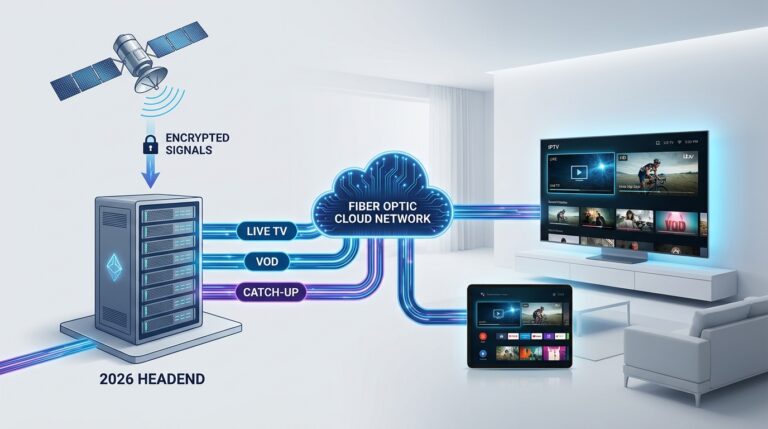
The technology works by breaking down video content into data packets and delivering them over IP networks. These packets are then reassembled on your device—whether it’s a smart TV, smartphone, or streaming stick—into a seamless viewing experience. What makes IPTV particularly appealing in 2026 is how advanced streaming protocols have become, reducing buffering and improving video quality even on average internet connections.
Another important thing to understand is that IPTV often relies on dedicated apps or players. These apps act as your gateway, allowing you to browse channels, watch movies, and even record shows. With the rise of AI-powered recommendations, many IPTV services now personalize your viewing experience, making it feel more like a curated entertainment hub than a simple TV replacement.
Types of IPTV Services
Not all IPTV services are built the same, and this is where beginners often get confused. There are actually three main types of IPTV services, each catering to different viewing habits and preferences.
First, there’s Live IPTV, which mimics traditional TV by offering real-time broadcasts of channels. This is perfect for sports fans, news watchers, or anyone who enjoys the “live” experience. Then comes Video on Demand (VOD), where you can access a library of movies and TV shows whenever you want. It’s basically your personal streaming library, available 24/7.
The third type is Time-Shifted Media, which lets you watch previously aired programs. Missed last night’s game or your favorite show? No problem—you can rewind and catch up without any hassle. Some advanced IPTV services even offer cloud DVR features, allowing you to record and store content for later viewing.
Choosing between these types often depends on your lifestyle. Are you someone who enjoys binge-watching series on weekends? Or do you prefer catching live events as they happen? Understanding these categories will help you narrow down your options and avoid paying for features you don’t actually need.
Why IPTV Is Becoming Popular in 2026
Shift from Cable to Streaming
There’s a quiet revolution happening in living rooms around the world, and it’s not so quiet anymore. Traditional cable TV, once the king of home entertainment, is steadily losing ground to IPTV and other streaming services. In fact, recent industry reports suggest that over 65% of households globally have reduced or completely cut their cable subscriptions by 2026. That’s not just a trend—it’s a major shift in behavior.
So, what’s driving this change? For starters, people are tired of paying for hundreds of channels they never watch. Cable packages often feel bloated and overpriced, while IPTV offers a more tailored experience. You get to choose what you want, often at a fraction of the cost.
Another factor is flexibility. With IPTV, you’re no longer tied to your living room TV. You can watch your favorite shows on your phone during a commute, on a tablet in bed, or on a laptop while traveling. It’s entertainment that adapts to your lifestyle, not the other way around.
The younger generation, in particular, has embraced this shift wholeheartedly. Growing up with smartphones and on-demand content, they expect instant access and seamless experiences. IPTV fits perfectly into this expectation, offering a modern alternative to outdated broadcasting models.
Benefits Over Traditional TV
Let’s be honest—traditional TV feels a bit like using a flip phone in a smartphone world. It still works, but it’s nowhere near as efficient or enjoyable. IPTV brings a host of benefits that make it a clear winner for many users.
One of the biggest advantages is cost efficiency. Many IPTV subscriptions are significantly cheaper than cable or satellite packages, yet they offer more content and flexibility. You’re essentially getting more bang for your buck.
Then there’s the issue of content variety. IPTV services often include international channels, niche content, and exclusive shows that you won’t find on regular TV. Whether you’re into Korean dramas, European football, or indie films, there’s something for everyone.
Another major perk is customization. With IPTV, you can create playlists, set reminders, and even receive personalized recommendations based on your viewing habits. It’s like having a TV that actually understands your preferences.
Finally, there’s the convenience factor. No installation hassles, no bulky hardware, and no long-term contracts. You can start or stop your subscription whenever you want, making IPTV a low-risk, high-reward option for modern viewers
Key Features to Look for in an IPTV Subscription
Channel Selection and Categories
When you’re choosing an IPTV subscription, the channel lineup is where everything begins—and honestly, where most people either hit the jackpot or feel completely disappointed. It’s easy to get distracted by providers boasting “10,000+ channels,” but let’s be real for a second: are you actually going to watch even 5% of those? Probably not. What really matters is whether the service offers the channels you genuinely care about.
Start by asking yourself a simple question: What do I actually watch on a weekly basis? If you’re a sports fan, you’ll want access to premium sports networks, pay-per-view events, and possibly international leagues. If you’re more into movies and series, then a strong VOD (Video on Demand) library becomes essential. Families, on the other hand, might prioritize kids’ channels, educational content, and regional programming.
Another often overlooked factor is regional availability. Some IPTV providers specialize in specific regions—like US, UK, Canada, or Europe—while others offer global packages. If you’re living abroad and want access to your home country’s content, this becomes a game-changer.
Also, pay attention to how channels are organized. A well-structured interface with categorized sections (sports, news, entertainment, kids, etc.) saves you from endless scrolling. It’s like walking into a neatly arranged store versus a chaotic warehouse—you’ll find what you need much faster.
At the end of the day, a “good” IPTV subscription isn’t the one with the most channels—it’s the one with the right channels for you.
Video Quality and Streaming Stability
Let’s talk about something that can make or break your entire IPTV experience: video quality and streaming stability. You could have access to thousands of channels, but if everything buffers every few minutes or streams in blurry resolution, it’s going to feel like a downgrade rather than an upgrade.
In 2026, most reputable IPTV providers offer HD, Full HD (1080p), and even 4K streaming. But here’s the catch—not all providers deliver consistent quality across all channels. Some may advertise 4K, but only a handful of channels actually support it, and even those might struggle during peak hours.
Streaming stability depends heavily on the provider’s server infrastructure. High-quality IPTV services use powerful, well-distributed servers to handle large numbers of users simultaneously. This reduces buffering, lag, and downtime. Cheaper or unverified services, on the other hand, often suffer from overloaded servers—especially during live events like football matches or major broadcasts.
A good way to test this is through a free trial (which we’ll discuss later). During the trial, try watching content at different times of the day, especially during peak hours. Does it buffer? Does the quality drop? These are red flags you shouldn’t ignore.
Also, consider whether the service supports adaptive streaming, which automatically adjusts video quality based on your internet speed. This ensures smoother playback even if your connection fluctuates.
In short, don’t just look for “high resolution”—look for consistent performance. Because what’s the point of 4K if you can’t watch it without interruptions?
Device Compatibility
Imagine subscribing to an IPTV service only to realize it doesn’t work on your favorite device. Frustrating, right? That’s why device compatibility should be high on your checklist.
Most modern IPTV services are designed to work across multiple devices, including:
- Smart TVs (Samsung, LG, Android TV)
- Streaming devices (Amazon Firestick, Roku, Apple TV)
- Smartphones (iOS and Android)
- Tablets and laptops
But here’s where things get interesting—not all services offer the same level of support or performance across these devices. Some may work flawlessly on Android devices but feel clunky on iOS. Others might require third-party apps like IPTV Smarters, TiviMate, or VLC Media Player to function properly.
Ease of setup is another factor to consider. Beginners should look for services that offer simple installation guides or even dedicated apps available in app stores. The last thing you want is to spend hours figuring out complicated configurations.
Multi-device support is also worth checking. Some subscriptions allow you to stream on multiple devices simultaneously, which is perfect for families or shared households. Others limit you to a single connection unless you pay extra.
Think of your IPTV subscription as a universal remote—it should work seamlessly with all your devices, not just one. The more flexible it is, the more value you’ll get out of it.
Pricing and Subscription Plans Explained
Monthly vs Yearly Plans
Pricing is where things can get a little tricky, especially if you’re new to IPTV. At first glance, many services seem incredibly affordable—but once you dig deeper, you’ll notice different pricing tiers, hidden conditions, and varying levels of value.
The most common options you’ll come across are monthly and yearly plans. Monthly plans are perfect for beginners because they offer flexibility. You can test a service without committing long-term, and if it doesn’t meet your expectations, you can simply cancel. It’s like dating before getting married—you’re exploring your options.
Yearly plans, on the other hand, usually come with significant discounts. Some providers offer up to 40–60% savings compared to monthly subscriptions. If you’ve already tested the service and are confident in its quality, going yearly can save you a lot of money in the long run.
However, there’s a catch. Not all IPTV providers are reliable over time. Some may start strong but degrade in quality or even disappear altogether. That’s why it’s risky to jump into a long-term plan without proper testing.
Here’s a quick comparison to make things clearer:
| Plan Type | Pros | Cons |
|---|---|---|
| Monthly | Flexible, low commitment, easy to cancel | Higher cost over time |
| Yearly | Cost-effective, better value | Risk if service declines |
A smart approach? Start with a monthly plan, test thoroughly, and only upgrade if you’re fully satisfied.
Free Trials and Refund Policies
If there’s one thing you should never skip when choosing an IPTV service, it’s the free trial. Think of it as a test drive before buying a car—you wouldn’t commit without seeing how it performs, right?
Many reputable IPTV providers offer free trials ranging from 24 hours to 7 days. During this period, you should test everything: channel availability, streaming quality, device compatibility, and overall user experience. Don’t just casually browse—really push the service to its limits.
Pay attention to how the service performs during peak hours, how quickly channels load, and whether there are any interruptions. This is your chance to spot potential issues before spending money.
Refund policies are equally important. Some providers offer money-back guarantees, usually within a specific timeframe (like 7 or 14 days). This adds an extra layer of security, especially if you’re considering a longer subscription.
Be cautious of services that offer neither free trials nor refunds. That’s often a red flag, suggesting they’re not confident in their own product.
At the end of the day, a trustworthy IPTV provider should give you the opportunity to try before you buy—and a safety net in case things don’t go as expected.
Legal vs Illegal IPTV Services
How to Identify Legitimate Providers
Here’s where things get a bit serious—and honestly, a lot of beginners overlook this part until it’s too late. Not all IPTV services operate within legal boundaries, and choosing the wrong one can lead to more headaches than entertainment. So how do you separate legitimate IPTV providers from the questionable ones?
A good starting point is transparency. Legal IPTV services are usually very clear about who they are, what they offer, and how they operate. They have official websites, clear pricing structures, and proper customer support channels. You’ll also notice that they often partner with content creators or broadcasters, meaning they have the rights to distribute the channels and media they provide.
Another strong indicator is availability on official app stores like Google Play, Apple App Store, or Amazon Appstore. While not every legitimate service will have an app, many do—and they follow platform guidelines and licensing rules. That’s a layer of trust you shouldn’t ignore.
Payment methods also tell a story. Legitimate providers typically accept standard options like credit cards, PayPal, or recognized payment gateways. If a service only accepts cryptocurrency or unusual payment methods with no refund option, that’s a red flag waving right in your face.
You should also look at reviews and community feedback. Real users tend to share honest experiences, especially in forums or tech communities. If a provider consistently receives complaints about downtime, disappearing services, or legal warnings, it’s best to steer clear.
Choosing a legitimate IPTV service isn’t just about staying on the right side of the law—it’s about ensuring long-term reliability, consistent quality, and peace of mind.
Risks of Using Unverified IPTV
It might be tempting to go for those ultra-cheap IPTV subscriptions promising thousands of premium channels for the price of a cup of coffee. But let’s be honest—that deal often comes with hidden costs, and not the good kind.
One of the biggest risks is service instability. Unverified IPTV providers often operate without proper infrastructure, which means frequent buffering, channel outages, or even complete shutdowns. Imagine settling in to watch a big game, only for the stream to crash at the निर्ण moment. Frustrating doesn’t even begin to describe it.
Then there’s the issue of security and privacy. Some unverified services may expose you to malware, phishing attempts, or data breaches. Since these providers don’t follow standard regulations, your personal information might not be protected. That’s a risk you shouldn’t take lightly.
Legal consequences are another concern. While enforcement varies by region, accessing pirated content can lead to warnings, fines, or even legal action in some cases. It’s not just about saving money—it’s about avoiding unnecessary trouble.
Performance is also inconsistent. Even if the service works today, there’s no guarantee it will still be available next month. Many of these providers disappear overnight, taking your subscription fee with them.
In simple terms, unverified IPTV services are like building a house on sand—it might look fine at first, but it won’t stand for long. Investing in a reliable, legal option is always the smarter move.
Internet Requirements for IPTV
Minimum Speed Recommendations
Let’s clear something up right away: your IPTV experience is only as good as your internet connection. You could have the best subscription in the world, but if your internet is slow or unstable, you’re going to run into constant buffering and poor quality.
So, what kind of speed do you actually need? Here’s a general guideline:
| Streaming Quality | Recommended Speed |
|---|---|
| SD (Standard Definition) | 5 Mbps |
| HD (720p/1080p) | 10–15 Mbps |
| 4K Ultra HD | 25 Mbps or higher |
These numbers assume a stable connection with minimal interruptions. If multiple devices are using the same network—like phones, laptops, or gaming consoles—you’ll need even more bandwidth to keep everything running smoothly.
Another important factor is latency and stability, not just speed. A connection that constantly drops or fluctuates will ruin your streaming experience, even if the speed looks good on paper. That’s why a wired Ethernet connection is often more reliable than Wi-Fi, especially for high-quality streaming.
If you’re serious about IPTV, consider upgrading your router or internet plan if needed. It’s like upgrading the engine of a car—you’ll notice the difference immediately.
Role of VPN in IPTV Usage
You’ve probably heard people talk about using a VPN (Virtual Private Network) with IPTV, but is it really necessary? The answer depends on your situation, but in many cases, it’s a smart addition.
A VPN works by encrypting your internet connection and routing it through a secure server. This can help protect your privacy and prevent your ISP (Internet Service Provider) from monitoring your activity. It also helps avoid ISP throttling, where your internet speed is intentionally slowed down during streaming.
Another benefit is access. Some IPTV content may be restricted based on your location. A VPN allows you to connect to servers in different countries, potentially unlocking more content.
However, not all VPNs are created equal. A slow VPN can actually make your streaming worse, adding lag and buffering. So if you choose to use one, go for a high-speed, reputable provider.
Think of a VPN as a safety layer—it’s not always mandatory, but it can significantly improve your experience and peace of mind when used correctly.
Best IPTV Devices for Beginners
Smart TVs and Apps
If you’re just starting out with IPTV, your smart TV might already be all you need. Most modern smart TVs come with built-in app stores where you can download IPTV apps like IPTV Smarters or similar players.
The biggest advantage here is simplicity. No extra hardware, no complicated setup—just install the app, enter your subscription details, and you’re good to go. It’s a plug-and-play experience that’s perfect for beginners.
Smart TVs also offer a clean, integrated interface, making navigation easy and intuitive. You can switch between apps, adjust settings, and browse content without needing multiple remotes or devices.
However, there are some limitations. Not all smart TVs support every IPTV app, and performance can vary depending on the model. Older TVs, in particular, may struggle with high-quality streaming or advanced features.
Still, for most users, a smart TV is the easiest and most convenient way to get started with IPTV.
Streaming Devices (Firestick, Android Box)
If your TV isn’t smart—or you want more flexibility—streaming devices are a fantastic option. Devices like Amazon Firestick, Android TV boxes, and Apple TV have become incredibly popular for IPTV users.
Why? Because they offer more power, better app compatibility, and greater customization. For example, Android-based devices allow you to install a wide range of IPTV apps, tweak settings, and even use external players for improved performance.
The Firestick, in particular, is a favorite among beginners. It’s affordable, easy to set up, and supports most IPTV services. Plus, there are countless tutorials available online to guide you through the process.
Another advantage is portability. You can take your device with you when traveling and plug it into any compatible TV. Your entire IPTV setup goes with you—no hassle.
In many ways, streaming devices act as a bridge between simplicity and performance, making them an ideal choice for both beginners and more advanced users.
Customer Support and User Experience
Importance of Reliable Support
Here’s something most people don’t think about—until something breaks. Customer support might not seem like a big deal when everything is working perfectly, but the moment you run into buffering issues, login problems, or missing channels, it suddenly becomes the most important feature of your IPTV subscription.
A reliable IPTV provider should offer multiple support channels, such as live chat, email, or even ticket systems. The faster they respond, the better your experience will be. Imagine your service going down right before a major sports event and having no one to contact—that’s the kind of frustration you want to avoid.
Good support isn’t just about speed, though. It’s also about quality. Are the responses helpful? Do they actually solve your problem, or are they just sending generic replies? The difference is huge. Some premium IPTV services even offer 24/7 support, which is especially useful if you’re in a different time zone.
Another underrated aspect is setup assistance. Beginners often need help configuring apps, entering M3U URLs, or setting up devices. A provider that offers clear guides, tutorials, or even step-by-step onboarding can save you hours of confusion.
User reviews can be incredibly helpful here. If you notice consistent complaints about slow or unhelpful support, take that as a warning sign. On the flip side, providers with strong customer service often build loyal communities around them.
At the end of the day, IPTV isn’t just about content—it’s about the experience. And a big part of that experience is knowing someone has your back when things go wrong.
User Interface and Ease of Use
Let’s be honest—no one wants to wrestle with a confusing interface just to watch TV. A smooth, intuitive user interface (UI) can make your IPTV experience feel effortless, while a clunky one can turn it into a chore.
Think of the UI as the dashboard of your entertainment system. Everything you need—live TV, movies, settings—should be easy to find and navigate. The best IPTV services offer clean layouts, fast loading times, and well-organized menus.
Features like search functionality, favorites lists, and categorized channels can make a huge difference. Instead of scrolling endlessly, you can jump straight to what you want. Some services even include personalized recommendations, which adds a modern, streaming-like feel.
Another important factor is Electronic Program Guide (EPG) integration. This is basically your TV guide, showing what’s currently playing and what’s coming up next. A well-designed EPG makes browsing live channels much more enjoyable and efficient.
Ease of use becomes even more important if multiple people in your household are using the service. Not everyone is tech-savvy, so a simple, user-friendly interface ensures that everyone—from kids to grandparents—can enjoy the experience without frustration.
In short, the best IPTV subscription isn’t just powerful—it’s pleasant to use. Because entertainment should feel easy, not complicated.
Comparing IPTV Providers (Quick Table)
Choosing between IPTV providers can feel overwhelming, especially when they all claim to be “the best.” To simplify things, here’s a quick comparison table highlighting key factors you should evaluate:
| Feature | Provider A | Provider B | Provider C |
|---|---|---|---|
| Channel Count | 10,000+ | 8,500+ | 12,000+ |
| VOD Library | متوسط | كبير | كبير جدًا |
| Video Quality | HD/4K | HD | HD/4K |
| Free Trial | Yes (24h) | No | Yes (48h) |
| Device Support | All major devices | Limited | All devices |
| Customer Support | 24/7 Live Chat | Email only | Live Chat + Email |
| Price (Monthly) | $12 | $10 | $15 |
This table isn’t about naming specific brands—it’s about showing how to compare what actually matters. Instead of focusing on just one feature like price or channel count, look at the overall value.
For example, a slightly more expensive provider might offer better stability, support, and features—making it a smarter investment in the long run.
Final Tips for Choosing the Right IPTV Subscription
By now, you’ve probably realized that choosing the right IPTV subscription isn’t just about picking the cheapest option or the one with the most channels. It’s about finding the right balance between quality, reliability, and your personal preferences.
Start by identifying your needs. Are you into sports, movies, or international content? Do you need multi-device support? Once you’re clear on that, it becomes much easier to filter your options.
Always test before committing. Take advantage of free trials, explore the interface, and check streaming quality during different times of the day. This step alone can save you from making a costly mistake.
Don’t ignore the importance of internet quality and device compatibility. Even the best IPTV service won’t perform well if your setup isn’t optimized.
Also, prioritize legal and reputable providers. It might cost a bit more, but the peace of mind and consistent performance are worth it. Cheap, unverified services often end up costing more in frustration and risk.
Finally, trust your experience. If something feels off—whether it’s poor support, constant buffering, or unclear pricing—it’s probably not the right choice.
Choosing IPTV is a bit like choosing a long-term entertainment partner. Take your time, explore your options, and make a decision that fits your lifestyle.
Conclusion
IPTV has completely reshaped how people consume entertainment in 2026, offering flexibility, variety, and affordability that traditional TV simply can’t match. But with so many options available, making the right choice requires more than just a quick decision—it requires understanding what truly matters.
From evaluating channel selection and streaming quality to checking legality, device compatibility, and customer support, every factor plays a role in shaping your overall experience. The goal isn’t to find the “perfect” IPTV service—it’s to find the one that fits your specific needs.
When approached thoughtfully, IPTV can transform your viewing habits into something far more personalized and enjoyable. Instead of being tied to rigid schedules and limited content, you gain full control over your entertainment.
Make smart choices, test thoroughly, and prioritize quality over shortcuts—and you’ll set yourself up for a seamless IPTV experience.
FAQs
1. What is the best IPTV subscription for beginners in 2026?
The best IPTV subscription for beginners is one that offers a user-friendly interface, reliable customer support, and a free trial. Look for services that support multiple devices and provide stable HD streaming. Avoid overly complex setups and prioritize ease of use.
2. Is IPTV legal to use?
Yes, IPTV is legal when you use licensed and verified providers. The legality depends on whether the service has the rights to distribute the content. Always choose reputable services to avoid legal and security risks.
3. Do I need a VPN for IPTV?
A VPN is not always required, but it can improve privacy, prevent ISP throttling, and help access geo-restricted content. If you choose to use one, make sure it’s fast and reliable to avoid buffering issues.
4. How much internet speed do I need for IPTV?
For smooth streaming, you’ll need at least 10–15 Mbps for HD and 25 Mbps or more for 4K content. A stable connection is just as important as speed.
5. Can I use IPTV on multiple devices?
Yes, many IPTV services support multiple devices, but some limit the number of simultaneous connections. Check the provider’s policy before subscribing if you plan to use it on several devices.