
Article Outline
- H1: Premium IPTV Subscription with 10,000+ Channels – Is It Worth It?
- H2: What Is IPTV and How Does It Work?
- H3: Understanding Internet Protocol Television
- H3: How IPTV Differs from Traditional Cable and Satellite
- H2: What Does a Premium IPTV Subscription Offer?
- H3: Channel Variety and Global Access
- H3: On-Demand Content and Streaming Features
- H2: The Appeal of 10,000+ Channels – Reality or Marketing Hype?
- H3: Are All Channels Actually Watchable?
- H3: Quality vs Quantity in IPTV Services
- H2: Benefits of Using Premium IPTV Services
- H3: Cost Savings Compared to Cable
- H3: Flexibility and Multi-Device Access
- H2: Potential Drawbacks and Risks
- H3: Legal and Licensing Concerns
- H3: Stability, Buffering, and Downtime Issues
- H2: Features to Look for in a Reliable IPTV Provider
- H3: Server Stability and Uptime Guarantees
- H3: Customer Support and User Experience
- H2: IPTV vs Streaming Platforms (Netflix, Hulu, etc.)
- H3: Content Differences
- H3: Pricing Comparison Table
- H2: Is Premium IPTV Worth It for Different Users?
- H3: Sports Fans
- H3: Movie Lovers and International Viewers
- H2: How to Choose the Right IPTV Subscription
- H3: Trial Periods and Reviews
- H3: Security and Payment Safety
- H2: Conclusion
- H2: FAQs
- H2: What Is IPTV and How Does It Work?
Premium IPTV Subscription with 10,000+ Channels – Is It Worth It?
What Is IPTV and How Does It Work?
Understanding Internet Protocol Television
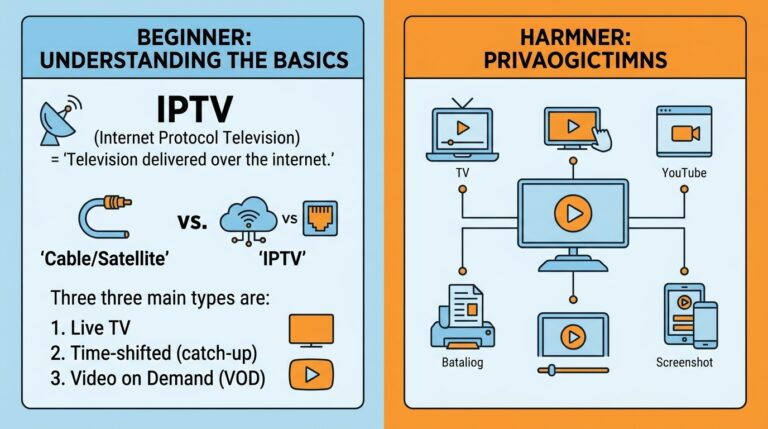
If you’ve ever wondered how people are suddenly accessing thousands of channels without a satellite dish or bulky cable box, the answer usually comes down to IPTV (Internet Protocol Television). Instead of relying on traditional broadcast signals, IPTV delivers content through the internet. That means your favorite shows, live sports, and even niche international channels are streamed directly to your device—whether it’s a smart TV, smartphone, tablet, or laptop.
Think of IPTV like Netflix, but on steroids. While Netflix focuses on on-demand content, IPTV combines live TV, video-on-demand (VOD), and sometimes even time-shifted programming into one platform. It uses your internet connection to transmit data packets, which are then decoded and displayed as video content. This approach allows for far more flexibility than traditional broadcasting.
One of the biggest advantages here is personalization. You’re no longer tied to rigid schedules or limited channel bundles. Instead, you can access a massive library of content whenever you want. And with claims of 10,000+ channels, it sounds almost too good to be true, right?
But here’s where things get interesting. Not all IPTV services are created equal. Some operate with proper licensing and infrastructure, while others exist in a gray area. So while the technology itself is perfectly legitimate, the way it’s implemented can vary widely.
How IPTV Differs from Traditional Cable and Satellite
Traditional TV services—like cable and satellite—work on a one-way broadcasting system. The provider sends signals, and you receive them. That’s it. There’s little room for customization, and you’re often stuck paying for channels you never watch.
IPTV flips that model completely. Instead of a one-way street, it’s more like a two-way highway where you can request specific content at any time. This interactive capability is what enables features like pause, rewind, and on-demand viewing.
Another key difference lies in infrastructure. Cable requires physical wiring, and satellite depends on dishes and signal reception. IPTV? All you need is a stable internet connection. This makes it incredibly accessible, especially in regions where traditional TV infrastructure might be limited.
There’s also the matter of cost. Cable subscriptions can easily run upwards of $100 per month, while many IPTV services offer packages for a fraction of that price. That’s a huge selling point—but it also raises questions about quality and legality.
Latency and buffering are also part of the conversation. With cable, you rarely experience buffering because the signal is constant. IPTV, on the other hand, depends heavily on your internet speed and the provider’s server quality. A weak connection or overloaded server can lead to interruptions.
So while IPTV offers unmatched flexibility and variety, it also introduces new variables that users need to consider carefully. And that brings us to the next big question—what exactly are you getting with those “10,000+ channels”?
Premium IPTV Subscription with 10,000+ Channels – Is It Worth It?
What Is IPTV and How Does It Work?
Understanding Internet Protocol Television
If you’ve ever wondered how people are suddenly accessing thousands of channels without a satellite dish or bulky cable box, the answer usually comes down to IPTV (Internet Protocol Television). Instead of relying on traditional broadcast signals, IPTV delivers content through the internet. That means your favorite shows, live sports, and even niche international channels are streamed directly to your device—whether it’s a smart TV, smartphone, tablet, or laptop.
Think of IPTV like Netflix, but on steroids. While Netflix focuses on on-demand content, IPTV combines live TV, video-on-demand (VOD), and sometimes even time-shifted programming into one platform. It uses your internet connection to transmit data packets, which are then decoded and displayed as video content. This approach allows for far more flexibility than traditional broadcasting.
One of the biggest advantages here is personalization. You’re no longer tied to rigid schedules or limited channel bundles. Instead, you can access a massive library of content whenever you want. And with claims of 10,000+ channels, it sounds almost too good to be true, right?
But here’s where things get interesting. Not all IPTV services are created equal. Some operate with proper licensing and infrastructure, while others exist in a gray area. So while the technology itself is perfectly legitimate, the way it’s implemented can vary widely.
How IPTV Differs from Traditional Cable and Satellite
Traditional TV services—like cable and satellite—work on a one-way broadcasting system. The provider sends signals, and you receive them. That’s it. There’s little room for customization, and you’re often stuck paying for channels you never watch.
IPTV flips that model completely. Instead of a one-way street, it’s more like a two-way highway where you can request specific content at any time. This interactive capability is what enables features like pause, rewind, and on-demand viewing.
Another key difference lies in infrastructure. Cable requires physical wiring, and satellite depends on dishes and signal reception. IPTV? All you need is a stable internet connection. This makes it incredibly accessible, especially in regions where traditional TV infrastructure might be limited.
There’s also the matter of cost. Cable subscriptions can easily run upwards of $100 per month, while many IPTV services offer packages for a fraction of that price. That’s a huge selling point—but it also raises questions about quality and legality.
Latency and buffering are also part of the conversation. With cable, you rarely experience buffering because the signal is constant. IPTV, on the other hand, depends heavily on your internet speed and the provider’s server quality. A weak connection or overloaded server can lead to interruptions.
So while IPTV offers unmatched flexibility and variety, it also introduces new variables that users need to consider carefully. And that brings us to the next big question—what exactly are you getting with those “10,000+ channels”?
The Appeal of 10,000+ Channels – Reality or Marketing Hype?
Are All Channels Actually Watchable?
Here’s where things get a bit less glamorous. The idea of 10,000+ channels sounds incredible, but in reality, not all of them are consistently watchable. Many users report that a significant portion of these channels may be duplicates, broken links, or streams with poor quality.
Think of it like downloading a massive music library where half the songs don’t play properly. It looks impressive on paper, but the user experience tells a different story. Some IPTV providers inflate their numbers to attract customers, knowing that most people won’t scroll through every single channel.
Another issue is regional restrictions. Some channels may only work reliably in certain locations, while others might require specific server connections. This can create a fragmented experience where you’re constantly switching streams or troubleshooting playback issues.
That said, reputable IPTV providers do maintain a high percentage of working channels. The key is finding those services rather than falling for flashy marketing claims.
Quality vs Quantity in IPTV Services
When it comes to IPTV, quality almost always beats quantity. A service with 2,000 high-quality, stable channels can easily outperform one boasting 10,000 unreliable ones. The real value lies in HD and 4K streaming, minimal buffering, and consistent uptime.
Let’s break this down in a simple comparison:
| Feature | High-Quality IPTV | Low-Quality IPTV |
|---|---|---|
| Channel Count | 2,000–5,000 | 10,000+ |
| Stream Stability | High | Inconsistent |
| Resolution | HD/4K | SD/HD mix |
| Buffering | Minimal | Frequent |
| User Experience | Smooth | Frustrating |
A smaller, curated selection often means better server management and more reliable streams. Providers that focus on quality invest in robust infrastructure, load balancing, and regular maintenance.
So while the number 10,000 grabs attention, it shouldn’t be your main decision factor. Instead, ask yourself: how many of those channels will you actually enjoy without interruptions?
Benefits of Using Premium IPTV Services
Cost Savings Compared to Cable
Let’s talk money—because for many people, this is where IPTV really shines. Traditional cable packages can feel like a financial trap. You sign up for a bundle, and suddenly you’re paying for dozens of channels you never watch. Add premium sports or movie packages, and your monthly bill can easily climb past $100 or even $150.
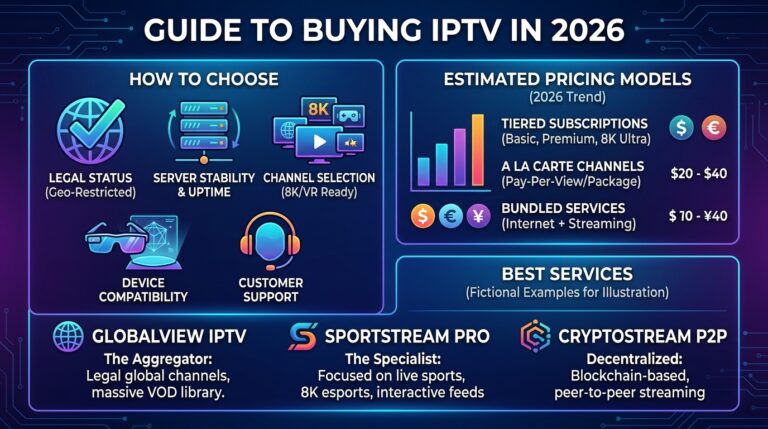
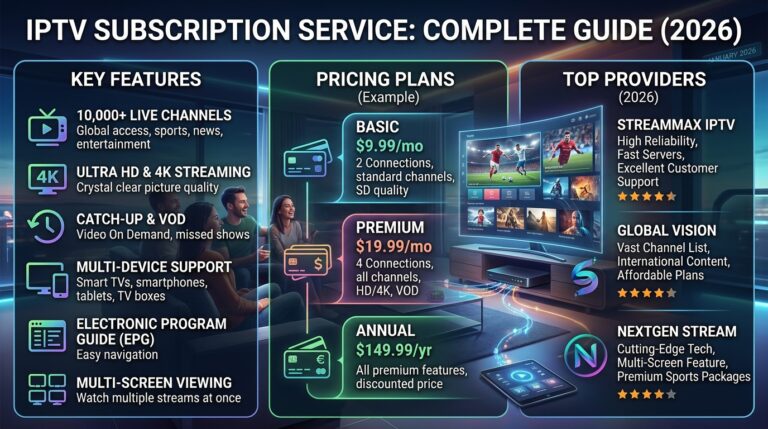
Now compare that to a premium IPTV subscription, which often ranges between $10 to $25 per month. That’s a massive difference. Over a year, you could save hundreds of dollars while still accessing a broader range of content.
But here’s the catch—lower cost doesn’t always mean better value. Some ultra-cheap IPTV services cut corners on server quality, leading to buffering and downtime. So while the savings are real, they need to be balanced against performance.
Another financial advantage is the lack of long-term contracts. Most IPTV services operate on a monthly or yearly subscription basis without locking you in. This flexibility allows you to test different providers without committing to a lengthy agreement.
Flexibility and Multi-Device Access
One of the most underrated perks of IPTV is how seamlessly it fits into modern life. You’re no longer tied to a single screen in your living room. Instead, you can access your subscription across multiple devices—smart TVs, smartphones, tablets, laptops, and even streaming sticks like Fire TV or Roku.
This flexibility changes how you consume content. Watching TV becomes something you do on your terms, not something scheduled around your day. Waiting in line? Watch a show. Traveling? Catch a live game. It’s entertainment without boundaries.
Many premium IPTV services also support multi-screen viewing, allowing different family members to watch different content simultaneously. This eliminates the classic household argument over what to watch.
There’s also the convenience of cloud-based access. No installations, no bulky hardware—just log in and start streaming. It’s a clean, minimal setup that appeals to users who prefer simplicity.
Still, this flexibility depends on your internet connection. Without a stable and reasonably fast connection (usually at least 15–25 Mbps for HD streaming), the experience can quickly go downhill.
Potential Drawbacks and Risks
Legal and Licensing Concerns
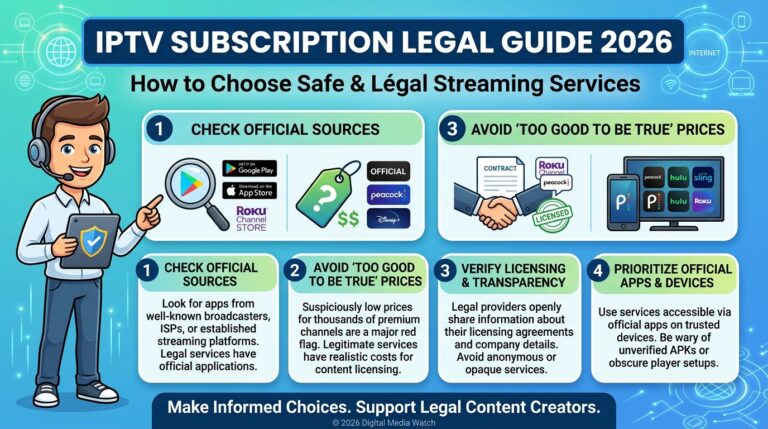
This is the part many people prefer to ignore—but it’s critical. Not every IPTV service operates within legal boundaries. While IPTV technology itself is completely legitimate, the legality depends on whether the provider has proper licensing agreements for the content they distribute.
Many “premium IPTV” services offering 10,000+ channels at very low prices often fall into a gray or outright illegal category. They may stream copyrighted content without authorization, which can expose users to risks depending on local laws. In some countries, authorities actively monitor and penalize illegal streaming, while in others enforcement is more relaxed—but that doesn’t make it safe.
Think of it like buying a designer watch for $10 from a street vendor. It might look great, but there’s a reason it’s that cheap. Similarly, if an IPTV service offers everything—premium sports, pay-per-view events, international channels—for a fraction of the legitimate cost, it’s worth questioning how they’re able to do that.
Another issue is service shutdowns. Unauthorized IPTV providers can disappear overnight due to legal action, leaving users without access and no refunds. This unpredictability can be frustrating, especially if you’ve paid for a long-term subscription.
To stay on the safe side, it’s always better to choose licensed IPTV providers or services that clearly disclose their content partnerships. It may cost more, but it ensures stability and peace of mind.
Stability, Buffering, and Downtime Issues
Even if you find a legally sound IPTV provider, performance can still be a mixed bag. Unlike cable or satellite TV, IPTV relies heavily on internet infrastructure—both yours and the provider’s. And that introduces a few potential headaches.
Buffering is probably the most common complaint. You’re in the middle of a crucial match or an intense movie scene, and suddenly the stream pauses. It’s like someone hitting the brakes on your entertainment. This usually happens due to server overload, insufficient bandwidth, or poor network optimization.
Downtime is another concern. Some IPTV services experience outages during peak hours, especially when many users are streaming simultaneously. This is particularly frustrating during major live events when demand spikes.
There’s also the issue of inconsistent quality. One channel might stream perfectly in HD, while another struggles to maintain a stable connection. This inconsistency can make the overall experience feel unreliable.
To minimize these issues, users often invest in high-speed internet (at least 25–50 Mbps for smooth streaming) and sometimes even use VPNs to improve routing. But again, this adds another layer of complexity that not everyone wants to deal with.
Features to Look for in a Reliable IPTV Provider
Server Stability and Uptime Guarantees
If there’s one factor that can make or break your IPTV experience, it’s server stability. You can have thousands of channels and a sleek interface, but if the servers can’t handle the load, everything falls apart.
Reliable IPTV providers invest in high-performance servers, load balancing systems, and global CDN (Content Delivery Network) integration. This ensures that streams are distributed efficiently, reducing buffering and downtime. Some even offer uptime guarantees—typically around 99% or higher—which is a good indicator of reliability.
A useful tip is to look for providers that offer free trials or short-term plans. This allows you to test their performance during peak hours before committing. Pay attention to how quickly channels load, whether streams remain stable, and how often interruptions occur.
Another sign of a solid provider is adaptive streaming quality. This means the service automatically adjusts video quality based on your internet speed, ensuring a smoother experience even during fluctuations.
In short, don’t be blinded by channel count. A smaller, well-managed service with strong infrastructure will always outperform a bloated one with weak servers.
Customer Support and User Experience
Let’s be honest—technology doesn’t always behave. When something goes wrong, having responsive customer support can make a huge difference. Unfortunately, this is an area where many IPTV providers fall short.
Reliable services offer 24/7 support via live chat, email, or even Telegram/WhatsApp groups. Quick response times and knowledgeable support staff are key indicators of professionalism. If a provider is hard to reach before you subscribe, it’s unlikely to improve afterward.
User experience also plays a major role. A clean, intuitive interface can make navigating thousands of channels feel effortless. Features like search filters, categorized content, favorites lists, and EPG (Electronic Program Guide) enhance usability significantly.
Some IPTV apps even include advanced features like parental controls, recording options, and personalized recommendations. These small touches can elevate the overall experience from “just okay” to genuinely enjoyable.
Ultimately, a good IPTV service should feel seamless—not like a constant troubleshooting exercise.
IPTV vs Streaming Platforms (Netflix, Hulu, etc.)
Content Differences
At first glance, IPTV and platforms like Netflix or Hulu might seem similar—they both stream content over the internet. But in reality, they serve very different purposes.
Streaming platforms focus primarily on on-demand content. They invest heavily in original programming, exclusive series, and curated libraries. You won’t find live TV channels or real-time sports events (at least not in the traditional sense).
IPTV, on the other hand, is more like a digital replacement for cable TV. It offers live channels, including news, sports, and regional programming, along with on-demand options. This makes it ideal for users who want a mix of live and recorded content.
Here’s a quick comparison:
| Feature | IPTV | Netflix/Hulu |
|---|---|---|
| Live TV | Yes | Limited/No |
| On-Demand Content | Yes | Yes |
| Sports Channels | Extensive | Limited |
| Original Content | Rare | Extensive |
| Channel Variety | Massive | Curated |
So the choice depends on your viewing habits. If you love binge-watching original series, streaming platforms win. If you want live sports and global channels, IPTV takes the lead.
Pricing Comparison Table
Pricing is another area where the differences become clear:
| Service Type | Average Monthly Cost | Content Scope |
|---|---|---|
| Cable TV | $80–$150 | Limited + Bundled |
| IPTV | $10–$25 | Massive + Flexible |
| Netflix/Hulu | $7–$20 | Curated + Original |
While IPTV appears to offer the most value, remember that price often reflects licensing, infrastructure, and service quality. Cheaper isn’t always better—it’s about finding the right balance.
Is Premium IPTV Worth It for Different Users?
Sports Fans
If you’re a sports enthusiast, IPTV can feel like hitting the jackpot. Traditional broadcasting often restricts access to certain leagues or events based on region. IPTV breaks those barriers, offering global sports coverage in one place.
From football and basketball to cricket and MMA, you can access multiple leagues without juggling subscriptions. This is especially valuable during overlapping seasons when different events happen simultaneously.
However, reliability is crucial here. There’s nothing worse than a stream crashing during a निर्णायक moment. So for sports fans, choosing a high-quality provider with stable servers is non-negotiable.
Movie Lovers and International Viewers
For movie lovers, IPTV offers a vast library that spans genres, languages, and eras. You’re not limited to Hollywood blockbusters—you can explore foreign films, indie productions, and classic cinema with ease.
International viewers benefit even more. Whether you want channels from your home country or content in your native language, IPTV provides access that traditional services often lack.
This global reach makes IPTV particularly appealing for expatriates or multicultural households. It bridges the gap between different regions, bringing diverse content under one roof.
How to Choose the Right IPTV Subscription
Trial Periods and Reviews
Choosing an IPTV provider without testing it first is like buying a car without a test drive. Many reputable services offer 24–48 hour trials, allowing you to evaluate performance, channel availability, and overall experience.
User reviews are another valuable resource—but take them with a grain of salt. Look for consistent patterns rather than isolated opinions. If multiple users report buffering or downtime, it’s likely a real issue.
Security and Payment Safety
Security is often overlooked but incredibly important. Avoid providers that only accept cryptocurrency or untraceable payment methods, as this can be a red flag. Instead, look for services that offer secure payment gateways and transparent policies.
Using a VPN can add an extra layer of privacy, especially if you’re unsure about the provider’s legitimacy. It’s a small step that can make a big difference in protecting your data.
How to Choose the Right IPTV Subscription
Trial Periods and Reviews
Choosing an IPTV provider without testing it first is like buying a car without a test drive. Many reputable services offer 24–48 hour trials, allowing you to evaluate performance, channel availability, and overall experience.
User reviews are another valuable resource—but take them with a grain of salt. Look for consistent patterns rather than isolated opinions. If multiple users report buffering or downtime, it’s likely a real issue.
Security and Payment Safety
Security is often overlooked but incredibly important. Avoid providers that only accept cryptocurrency or untraceable payment methods, as this can be a red flag. Instead, look for services that offer secure payment gateways and transparent policies.
Using a VPN can add an extra layer of privacy, especially if you’re unsure about the provider’s legitimacy. It’s a small step that can make a big difference in protecting your data.
FAQs
1. Is IPTV legal to use?
Yes, IPTV technology is legal. However, the legality depends on whether the provider has proper licenses for the content they stream.
2. Do I need fast internet for IPTV?
Yes, a stable connection of at least 15–25 Mbps is recommended for HD streaming, while 4K may require higher speeds.
3. Can IPTV replace cable TV completely?
For many users, yes. IPTV offers similar—and often more extensive—content with greater flexibility.
4. Why do some IPTV services buffer a lot?
Buffering usually occurs due to poor server quality, high traffic, or slow internet connections.
5. Are 10,000+ channels واقعی or just marketing?
Partially both. While some services do offer thousands of channels, not all are consistently functional or high quality.